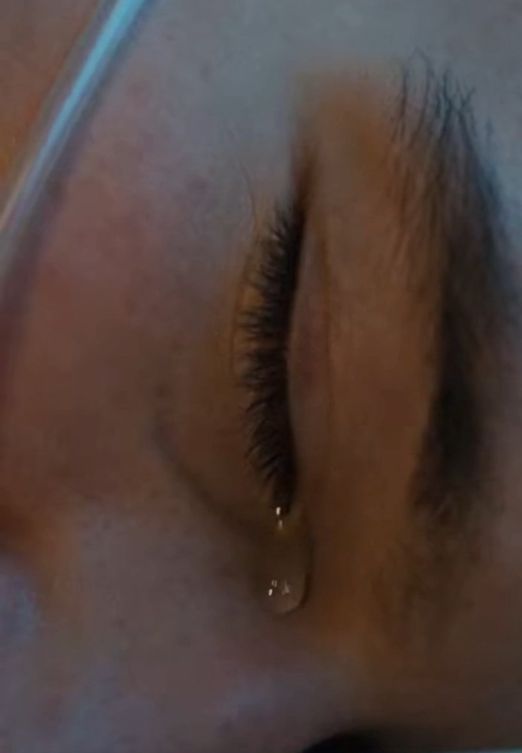
He lay in a hospital bed pretending to be unconscious… But his wife’s phone call revealed she ordered the crash herself.
The monitors beeped without mercy. Alexander Hayes had not moved in three days—not a finger, not an eyelid. The nurses stopped checking whether he reacted to sound. His wife had stopped touching him on day one.
He heard everything.
The crash hadn’t been an accident. He’d known it the moment he woke up—the way a man knows when a room has changed while he slept. His SUV was inspected weekly. His driver had worked for him eleven years. That curve was one he knew in his sleep. Someone had reached into the machinery of his life and pulled a wire loose.
So he made the only choice that gave him any advantage: stillness.
On the third morning, Maria arrived with her mop and her bucket and the kind of exhaustion that lives in a person’s shoulders rather than their face. She moved carefully, the way people move around the sick—like noise itself might do damage. She straightened his blanket. She shifted a lamp that had been aimed directly at his closed eyes. She wiped the bedside table without disturbing the IV line, each motion deliberate and unhurried.
Then she dampened a cloth and cleaned his hand.
It wasn’t clinical. It wasn’t efficient. It was the way someone touches a person they’ve decided still matters.
Her phone buzzed. She stepped back and answered in a low voice, pressing herself against the wall.
“Hello, Mom?”
Alexander stopped breathing on purpose, listening so hard the monitor’s beeping seemed to fade.
“No, Mom… not years.” Her voice caught and buckled at the seam. “She said if we don’t start treatment right away, it could be three months. Maybe less.”
He felt the chill move through him before he understood the words.
“Lily… my baby… my Lily is seven years old, Mom… how do I tell her she’s this sick?”
The rag slipped from her hand into the bucket. She didn’t reach for it.
“The treatment costs two hundred eighty thousand dollars… yes, I know we don’t have it… I know it’s impossible… but I’m not giving up on her.”
Her voice split completely. She sat in the chair beside his bed—the chair no one else had sat in—and cried the way people cry when they believe they’re alone. Not carefully. Not quietly. The kind of crying that a person can’t perform, only endure.
Alexander lay there with broken ribs and a fractured skull, and the worst pain in the room had nothing to do with him.
When she gathered herself, Maria placed her hand over his—just rested it there—and spoke to the still man in the bed the way people sometimes speak to the dying: not for response, but for the record.
“If you could hear me, Mr. Hayes…” She paused. “You were always respectful. You never yelled at me at the company. You never made me feel invisible.”
He knew her face now. He’d processed it—the uniform, the ponytail, the hands roughened from chemical-grade cleaning agents. He had passed her in the hallways of three different buildings and never once registered her as a person who knew his name, who tracked his mood, who had built a quiet opinion of him over years of small moments he’d never noticed.
She stood, adjusted his blanket the way someone tucks in a child, and said softly, “Your children came today. They weren’t allowed in, but they’ll come back. You can see it in their faces—they love you very much, Mr. Hayes.”
Then she left, and the room filled up with something that had not been there before.
That night, the door opened with fast heels and expensive perfume.
Vanessa moved through the room like she was already somewhere else. She was on speakerphone before she reached the bed.
“Yes, sweetheart, I’m here,” she said in a voice Alexander had never once heard her use with him. “He’s the same. Basically a vegetable.”
The male voice on the other end was unmistakable.
Grant Mercer. His partner. His longest alliance. The man who’d been at his wedding and signed his daughter’s birthday card and sat across from him in contract negotiations for fourteen years.
“I’m so tired of this act,” Vanessa continued, lowering her voice into the dangerous register of a shared secret. “Coming here, pretending to care, talking to doctors. I’m sick of it.”
“The brakes were handled perfectly,” Grant said. “No one’s going to look too closely.”
Alexander’s pulse slammed against his injured ribs so hard he was afraid the monitor would spike.
Vanessa sighed. “If he doesn’t wake up, the insurance pays out, the company transfers under the emergency clause, and we finally have what we deserve. I told you from the beginning this was the cleanest way.”
She stepped closer to the bed. He felt her lean down. Her fingers brushed his cheek—cold, rehearsed, theatrical.
“If you knew who I really was,” she whispered, “you’d know you chose the wrong wife, Alex.”
She straightened, returned to her sweet voice for Grant, and walked out.
For a long time, Alexander did not move. He lay in the dark with the proof burning through him and his children’s names ringing in his ears—Noah, Sophie—spoken by his wife in the same indifferent tone she used for bad weather or a delayed flight.
He was not going to let grief make this mistake. He was going to win.
Ten minutes later, the door opened again with soft footsteps.
Maria set down a cup of water on the bedside table—not the mop, not the bucket—just the cup, like she’d been thinking about him on her break.
“I don’t know if you can really hear me,” she said, sitting beside him the way a family member sits. “But today I felt like maybe you could. And I want to believe that.”
She took a folded piece of paper from her apron pocket and placed it on the table.
“Sophie gave me a drawing for you.” Maria’s voice went quiet. “She said, ‘Leave it for my daddy so he won’t be scared.'”
In the dark behind his eyelids, Alexander saw it perfectly: Sophie’s crayon universe, the giant yellow sun, the smiling man standing between two small figures who held his hands.
He could no longer do this only for revenge.
He had to do it for the people in that drawing.
The next morning, when the doctor walked in for rounds, Alexander opened his eyes.
The man stumbled back into the wall and nearly dropped his clipboard.
“Mr. Hayes—my God—”
“I need a phone,” Alexander said. His voice came out wrecked and hoarse from days of silence. “And no one can know yet that I remember everything.”
He worked the way he’d built his company: precisely, quietly, without announcing the move until it was already complete. He called his attorney—not the firm’s senior partner who reported to the board, but the man he’d known since law school, the one who owed him nothing and liked him anyway. He ordered an independent mechanical inspection of the SUV, the repair shop, the maintenance logs, and the parking garage security footage from the forty-eight hours before the crash. He pulled phone records, financial transfers, and flagged emails through proper legal channels.
Then he asked for his children.
When Noah and Sophie came through the door they ran at him, and Noah threw his arms around him so hard it reopened something in Alexander’s ribs that he did not mention. Sophie pressed his hand against her cheek and held it there.
“Daddy.” Her voice was the smallest sound in the world. “I thought you were going to leave.”
“I’m here, sweetheart,” he said. “And I’m not going anywhere.”
That same afternoon, he asked the nurses to call Maria.
She came into the room uncertain, smoothing her uniform, clearly rehearsing an apology for something she hadn’t done wrong. When she saw him sitting up, awake, looking directly at her, she stopped moving entirely.
“Mr. Hayes… I didn’t know—”
“I did,” he said. “I heard everything.”
She went pale. Her hands came up slightly, some instinct toward retreat.
“I’m so sorry, I didn’t mean to burden you, I was desperate and I—”
“Don’t apologize.” He kept his voice steady. “You gave me something back that I was losing. You reminded me who I wanted to be.”
Maria’s eyes filled.
“My little girl.” The words came out barely above a whisper. “I don’t know what to do anymore.”
He looked at her with the kind of calm that only comes after a decision has already been made.
“We’re going to do something,” he said. “And we’re going to do it properly. No conditions. No humiliation. No favor you’ll spend years trying to repay.”
Through a charitable foundation bearing his mother’s name, Alexander arranged full coverage of Lily’s treatment—consultations, medication, hospital stays, counseling, follow-up care, all of it formalized with medical oversight and legal protection. He restructured Maria’s work schedule: fewer hours, same pay, maximum time with her daughter during treatment.
“The most important thing right now,” he told her, “is that Lily has you strong.”
Maria pressed both hands over her mouth and cried—but differently than she had cried in this room before. The first time had been grief. This was release.
Meanwhile, the other matter moved forward without noise.
The driver broke first. He’d been living with the weight for weeks, and when he learned Alexander had regained consciousness, the architecture of fear and guilt collapsed in on him.
“They paid me,” he said, crying in front of Alexander’s attorney. “They said if I refused, my family would disappear. I tampered with the system. I thought they only wanted to scare him. Once it started, I couldn’t stop.”
The mechanic’s testimony followed. Then the financial transfers. Then the call logs showing seventeen contacts between Vanessa and Grant in the seventy-two hours before the crash.
Alexander waited until he could stand without assistance.
Then he called a meeting.
He told Vanessa and Grant it was about the company’s future and the family’s transition plan. He said he was ready to discuss next steps. He used the word unity.
They arrived confident. Grant in his best suit, already rehearsing the expressions of a loyal friend navigating a tragedy. Vanessa with her legs crossed before she’d fully sat down, her whole posture a performance of patience.
Grant spoke first, using words like difficult times and partnership and what Alexander would want.
Alexander let him finish.
Then he pressed a button on the table.
Vanessa’s voice filled the room:
“And the brakes were handled perfectly… No one is going to look too closely.”
Then Grant’s:
“If he doesn’t wake up, everything gets easier. The insurance, control of the company… we’ll finally have what we deserve.”
The color left their faces at the same rate, as if drained by the same drain.
Grant recovered first, his voice dropping into negotiation register. “Alexander, we can fix this. We’re partners. You’re misunderstanding the context of—”
“No,” Alexander said. The word came out quiet and final, the way a door closes in an empty house. “I was the one who misunderstood before. I misunderstood for years. Today I’m simply hearing the truth.”
Vanessa stared at him with an expression he’d never seen on her—not fear exactly, but the look of someone who has suddenly realized the person across from them was never the person they thought.
“Alex, please, just listen to me—”
“Don’t call me that,” he said. “That name died the day you decided to kill me.”
The door opened.
His attorney entered first. Behind him, a federal agent and two officers.
Grant went still. Vanessa looked at the door, then at Alexander, then back at the door, as if calculating a route that no longer existed.
They left the room in handcuffs.
The story spread the way real stories spread—not with drama but with repetition, from one person to the next, until it became the thing Dallas talked about for a season. The businessman who lay still in a hospital bed and listened while his wife arranged his funeral. The driver who broke. The recordings. The handcuffs.
Alexander stopped following the coverage after the first week.
He had other things to pay attention to.
Noah laughed again. Sophie started leaving drawings on his desk at home, a new one every few days—increasingly elaborate, increasingly yellow, always featuring the same giant sun.
And one afternoon, Maria hurried into the hospital garden where Alexander sat with his children, her phone already extended toward him, laughing and crying at the same time in the specific combination that only good news produces.
“Look, Mr. Hayes—look at Lily!”
On the screen: a small girl on a hospital bed, a medical bracelet on her wrist, a miniature keyboard in front of her. She pressed the keys with clumsy, delighted concentration, and every time she managed to play something that resembled a melody, she laughed out loud.
Alexander watched the video with Noah standing at his shoulder and Sophie’s arm threaded through his. His chest expanded—slowly, completely—the way it hadn’t since before the crash.
Maria wiped her face. “Thank you. I don’t know how I’ll ever repay you.”
He shook his head once.
“You don’t owe me anything, Maria.” He paused. “If I’m still here, it’s because of you too.”
Later that evening, he found Sophie’s drawing from the hospital—still on the table where Maria had left it, slightly creased at the fold. He held it in both hands: the smiling man, the two small figures, the enormous sun taking up fully half the page.
He had spent twenty years building things that were supposed to last.
His fortune hadn’t saved him. His reputation hadn’t saved him. His intelligence, his contracts, his carefully assembled empire—none of it had been in the room when he needed saving.
What had saved him was a woman who believed no one was listening, speaking to him as if he were still a person. In a world that had treated him like a balance sheet, she had treated him like a man. And in that small, unwitnessed act, there had been more power than in everything he had ever built.
He set the drawing down carefully, the way you set down something that cost more than money.
Outside, Noah was kicking a soccer ball against the garden wall—left foot, always the left foot now, just like Alexander had been promising to teach him.
He put on his jacket and went outside to keep that promise.
