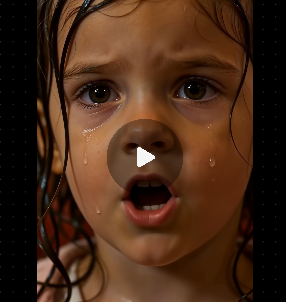
“The Pendant on the Table”
The rain had been falling since before dark.
Route 9 turned into a river after six, and the Silver Fork Diner sat at the edge of it like a lit match — the only warm thing for twelve miles in either direction. Truckers, a couple in a corner arguing quietly, a waitress named Bev who had been on shift since noon and moved like she intended to outlast everyone in the room.
Owen Garrett sat in booth four with a cup of coffee he wasn’t drinking and a pendant lying on the table in front of him.
He looked at it the way you look at things you can’t put away and can’t keep looking at — the kind of object that exists in the exact space between a wound and a memory. It was a small brass compass rose on a worn leather cord. The kind of thing a man carries for twenty years until it stops being jewelry and starts being something else. Owen had found it at the bottom of a box that morning while packing up what remained of his brother’s apartment, and he’d driven four hours without knowing where he was driving to and ended up here, in the rain, in booth four.
The bell above the door rang.
The girl who came in was maybe sixteen, maybe older — hard to tell when someone’s completely soaked and trying not to show it. Her hair was flat against her face, her jacket dark with rain, and she had the look of someone who had walked further than she’d planned to and arrived somewhere she wasn’t entirely sure about. She stood at the entrance for a moment, taking in the room with careful eyes.
Then she walked straight to Owen’s booth.
He looked up, surprised. She wasn’t looking at him. She was looking at the pendant on the table.
“My dad had one just like this,” she said.
Owen straightened slowly. “I’m sorry?”
She slid into the seat across from him without being invited — not rudely, just with the certainty of someone who has decided something and is past the point of second-guessing it. She pointed at the pendant.
“That compass rose. The etching on the back — is there a date on it?”
Owen turned it over. “September 14th, 1987.”
Something moved across the girl’s face. “That’s his birthday.”
The diner noise continued around them — Bev refilling coffee, rain against the windows, the couple in the corner having reached some kind of truce — and none of it touched the silence that had formed in booth four.
“What was his name?” Owen said carefully.
The girl met his eyes. “Thomas Garrett.”
Owen put the pendant down on the table.
He said nothing for a long moment. Outside, a truck went by on Route 9, its headlights sweeping briefly across the window and then gone.
“Tom is my brother,” Owen said. “Was.” The word cost him something visibly. “He passed eight weeks ago.”
The girl absorbed this with a stillness that suggested she already knew, or had suspected, or had been preparing herself for it since before she walked through the door.
“I know,” she said quietly. “I was at the service. You weren’t there.”
“I didn’t find out in time.” Owen’s jaw tightened. “We’d been— there was distance between us. For a long time. It’s complicated.”
“He talked about you,” she said. “A lot, actually. More than I think he meant to.”
Owen looked at her properly now — really looked, the way he’d been avoiding since she sat down. Dark eyes. The particular angle of the nose. The way she held herself, that specific combination of openness and guardedness that Tom had always had, that Owen had always envied and never quite managed to replicate.
“Who are you?” he said, though some part of him had already started to understand.
“My name is Clara.” She paused. “My mother is Elena Reyes. She and your brother were together for about two years, before— before things got hard for him. She never told him about me. She said she was protecting him. I think she was protecting herself.” Another pause, more deliberate. “I found out six months ago. I found letters he’d written and never sent. Fourteen of them. All addressed to someone named Owen.”
The coffee cup in Owen’s hand was very still.
“He wrote to me,” Owen said.
“He never mailed them. But he wrote them.” Clara reached into her jacket and produced an envelope — damp at the edges, but intact, sealed. She placed it on the table between the pendant and his coffee. “This one’s different from the others. It has your name on it and it has a stamp on it. He just never walked to the mailbox.”
Owen stared at the envelope.
“How did you find me?”
“The last letter has a return address. I drove here from Albuquerque.” She said it plainly, the way you say things that were hard but are now simply true. “I’ve been sitting in my car in your parking lot for an hour trying to decide if I was going to come in.”
“What made you come in?”
Clara looked at the pendant.
“I recognized it through the window. He wore it every day. I used to ask him what the date on the back meant and he’d always say ‘it’s the day someone decided to be brave.'” She looked up. “I thought maybe that was the sign I needed.”
Owen picked up the pendant. He held it for a moment — this thing his brother had carried for thirty-six years, through everything, including the long distance between two brothers who had loved each other badly and never fixed it.
“I have to ask you something,” Owen said. “And I need you to understand I’m not asking to be cruel. I just need to know the truth.”
“Okay.”
“Do you want something from me? Money, or—”
“I want to know what he was like when he was happy,” Clara said simply. “My mother only knew him when things were hard. The letters — they’re full of a person I don’t recognize. Someone lighter. I want to know if that person was real.”
Owen Garrett set the pendant down. He pressed his thumb against it once, briefly.
Then he looked at his brother’s daughter across the table — this girl who had driven fifteen hundred miles in the rain and sat in a parking lot for an hour gathering her courage and then walked into a roadside diner and recognized a pendant through a rain-streaked window — and something in his chest that had been locked for eight weeks, maybe longer, came quietly open.
“He was real,” Owen said. “Let me tell you about him.”
Bev appeared at the booth with her coffee pot and looked at the two of them — the man with wet eyes and the girl with wet hair — and set down a second cup without being asked.
Outside, Route 9 ran like a river, and the rain kept falling, and the Silver Fork Diner held its small warm light against the dark.
