She Wore My Stolen Charity Dress. By Midnight, I Owned the Room.
His mistress stole my charity auction dress before I ever touched the zipper.
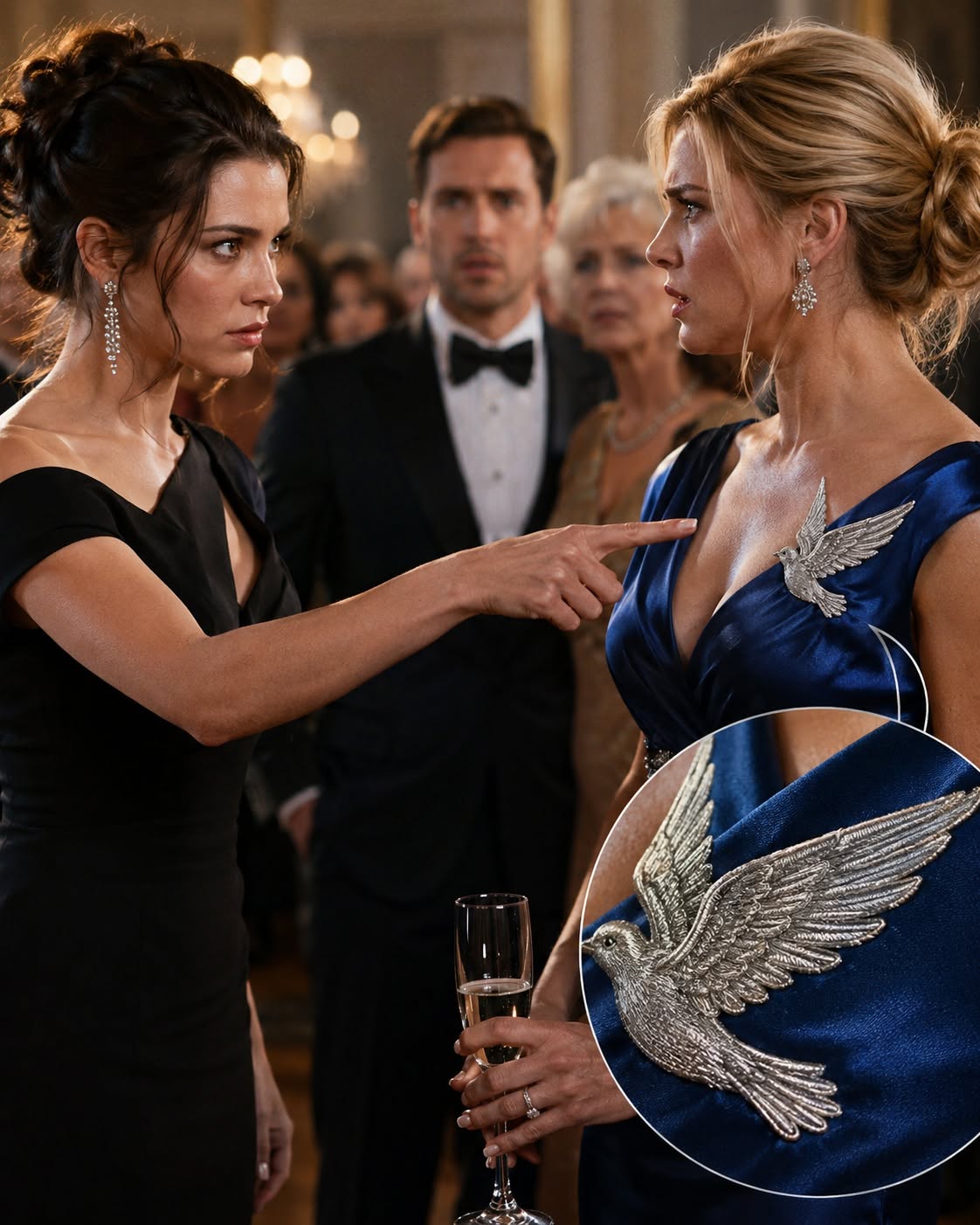
She arrived at the gala wearing midnight-blue silk stitched for the children’s hospital campaign.
My husband leaned close and whispered, “Don’t make this ugly, Ava.”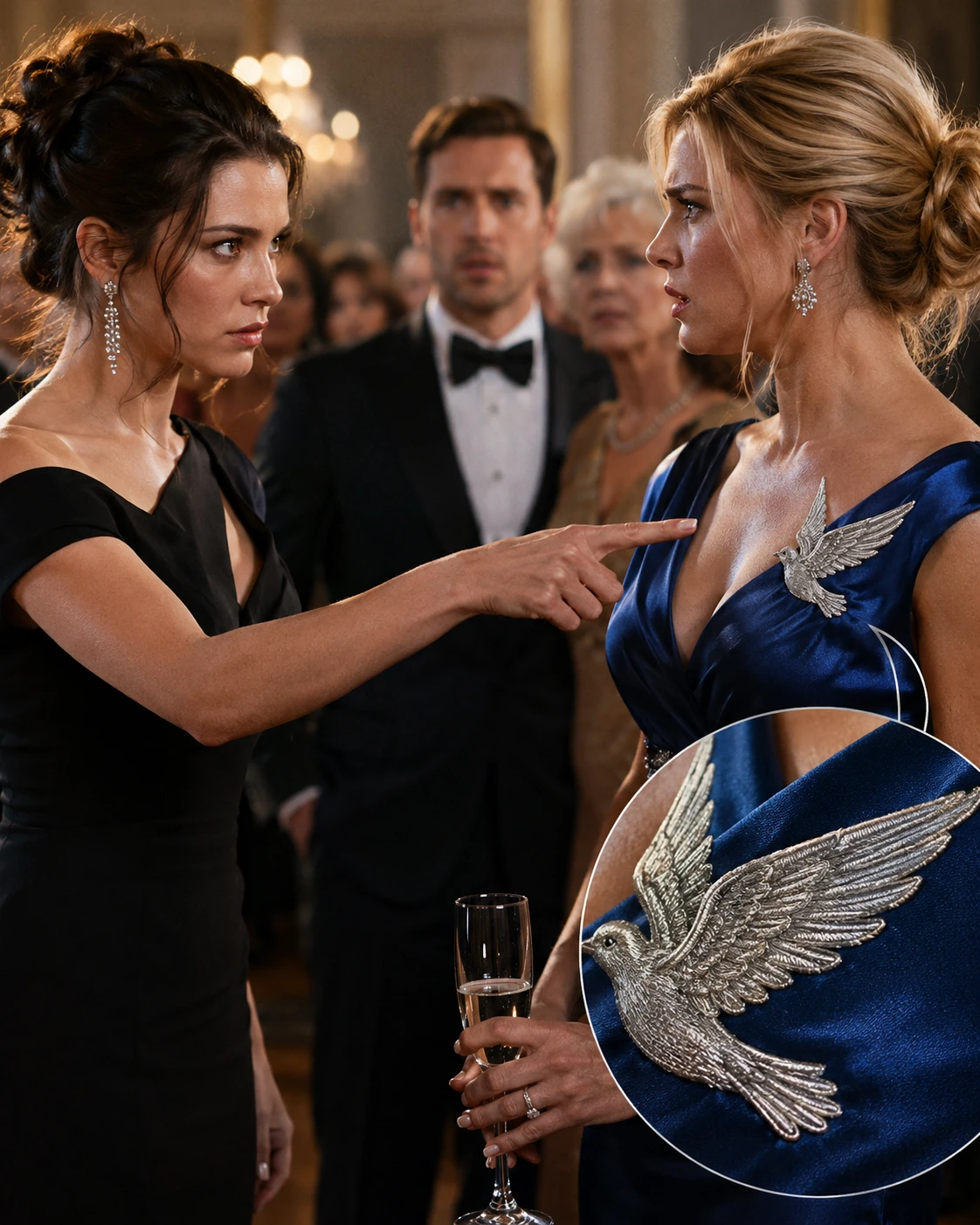
His mother looked proud, like the dress had chosen the right woman.
I looked at the silver dove sewn over Sloane West’s heart and smiled.
Then I told the donors she was wearing stolen foundation property.
Part 1: The Dress That Was Never Meant for Her
The Caldwell Children’s Hospital gala was supposed to smell like white roses, champagne, and very expensive forgiveness.
It was supposed to be my return to public life after six months of smiling through family statements, private humiliations, and the kind of silence wealthy people call dignity.
The ballroom of the Astor Meridian in Manhattan had been transformed into a winter garden under glass.
Silver branches climbed the walls.
Crystal birds hung from the chandeliers.
Every table held a card with a child’s name, a diagnosis, and a number that reminded rich people their money could still make them useful.
I had planned every detail.
Not because I loved parties.
Because my daughter had once slept on the seventh floor of Caldwell Children’s with tubes in her nose and a blue knitted cap slipping over one eye.
Because I remembered the sound of monitors at 3:17 a.m.
Because I remembered praying in a hospital room where the window faced a brick wall and promising God that if Lily lived, I would never be ornamental again.
The dress was part of that promise.
Midnight-blue silk, hand-beaded at the waist, with a silver dove stitched over the heart.
The designer, Elise Marrow, had made it as a one-of-one piece to be auctioned after I wore it for the opening speech.
The donor agreement was clear.
The dress belonged to the Whitmore Pediatric Foundation until the auction closed, and every dollar from the winning bid would fund a new neonatal transport unit.
Not shoes.
Not jewelry.
Not my vanity.
A mobile ICU for babies too small to survive a normal ambulance ride.
At six that evening, I stood in my suite on the twenty-third floor and stared at an empty garment rack.
The black velvet hanger was still there.
The security seal was cut cleanly in half.
My assistant, Nora, looked like she was about to throw up on the Persian rug.
“Ava,” she whispered, “I checked with wardrobe, hotel security, the loading dock, everyone.”
I touched the torn seal.
“Who signed it out?”
“No one.”
That was the first lie of the evening.
In my world, nothing vanished without a signature, a keycard, a camera angle, or a paid silence.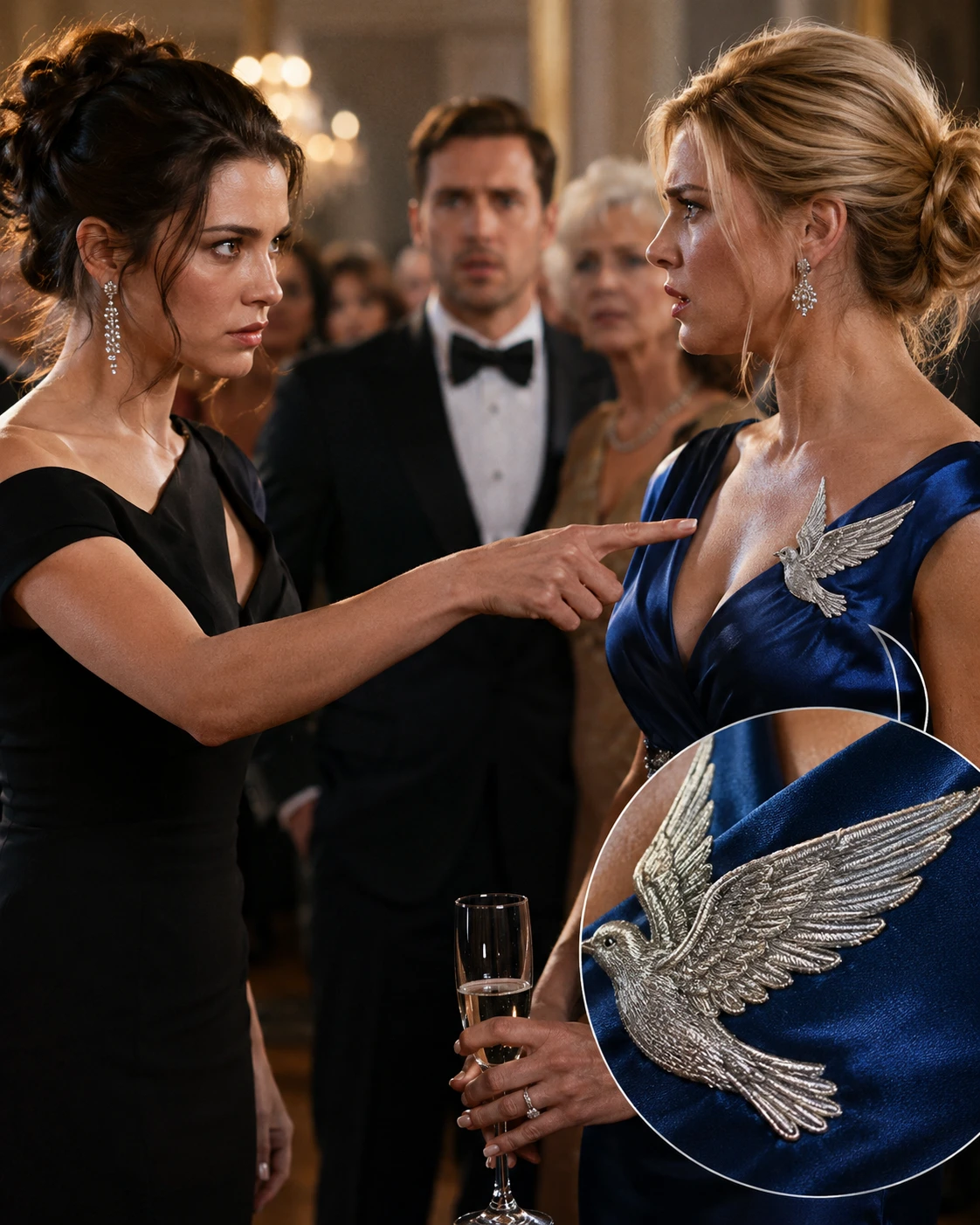
I did not scream.
I did not call my husband.
I did not collapse into the antique chair beside the window and ask why this kept happening to me.
I went to my suitcase and pulled out the emergency dress I always packed because my mother had raised me to believe elegance was not what you wore when things went right.
Elegance was how you looked when someone tried to bury you.
The backup gown was black, column-cut, severe enough to pass for mourning and expensive enough to pass for power.
I pinned my hair low, put on my mother’s diamond earrings, and painted my mouth a shade of red Grant once told me made me look “dangerous.”
Then I walked downstairs.
The first person I saw was my husband.
Grant Caldwell stood near the champagne tower in a tuxedo that fit him like a threat.
Tall, blond, beautifully bred, and empty in the way only men raised without consequences can be empty.
He was laughing with Senator Ames and the hospital board chair when he saw me.
His smile faltered for half a second.
Not because he was sorry.
Because I was not wearing the dress.
That was how I knew he had known.
Beside him stood Sloane West.
Twenty-seven, glossy, smug, and draped in midnight-blue silk.
My silk.
The silver dove gleamed over her heart like a stolen halo.
She turned slowly, giving the room her profile, her bare shoulder, her little practiced smile.
She touched the dove with two fingers as if it had flown there willingly.
The Caldwell women gathered around her in a pale, glittering flock.
Grant’s mother, Vivian Caldwell, tilted her head with satisfaction.
Vivian had once told me at brunch that women like Sloane were temporary, but women like me were responsible for keeping families intact.
She had said it while buttering toast.
That was Vivian’s gift.
She could deliver cruelty like etiquette.
Grant crossed the ballroom toward me with a glass of champagne in his hand and panic under his cufflinks.
“Ava,” he said softly, “we need to handle this privately.”
I looked past him at Sloane.
She lifted her glass to me.
Not high enough for anyone else to notice.
Just enough to tell me she knew.
“Privately?” I asked.
Grant’s jaw tightened.
“It’s a dress.”
I laughed once.
It was quiet.
It made him flinch.
“It’s a neonatal ambulance.”
His eyes flicked to my mouth, then to the donors, then back to me.
“Don’t make this ugly.”
Ugly.
That was his favorite word for a woman refusing to absorb a man’s filth gracefully.
I glanced at the stage where my speech waited in a leather folder.
Then I saw Lily’s name printed on the largest donor card near the entrance.
Lily Caldwell.
Born at thirty-one weeks.
Four pounds, one ounce.
Alive because a transport nurse named Mara kept one hand on her incubator and one hand on my shoulder.
I looked at my husband.
“I’m not going to make it ugly, Grant.”
His relief came too quickly.
“I’m going to make it accurate.”
Part 2: The Woman in the Stolen Silk
The room was full of people who had watched my marriage rot in slow motion.
They had seen Grant stop touching my back in photographs.
They had seen Sloane become his “strategic communications consultant” two weeks after she left a boutique PR firm with no clients and a closet full of ambition.
They had seen the tabloids blur her face outside our townhouse, then stop blurring it when her followers passed half a million.
They had seen me continue hosting luncheons, attending board meetings, visiting the hospital, and placing my wedding ring carefully on my finger every morning.
In public, I was Ava Whitmore Caldwell.
Heiress.
Philanthropist.
Mother.
Wife.
In private, I was the woman whose husband came home smelling like another woman’s perfume and told me I was imagining things.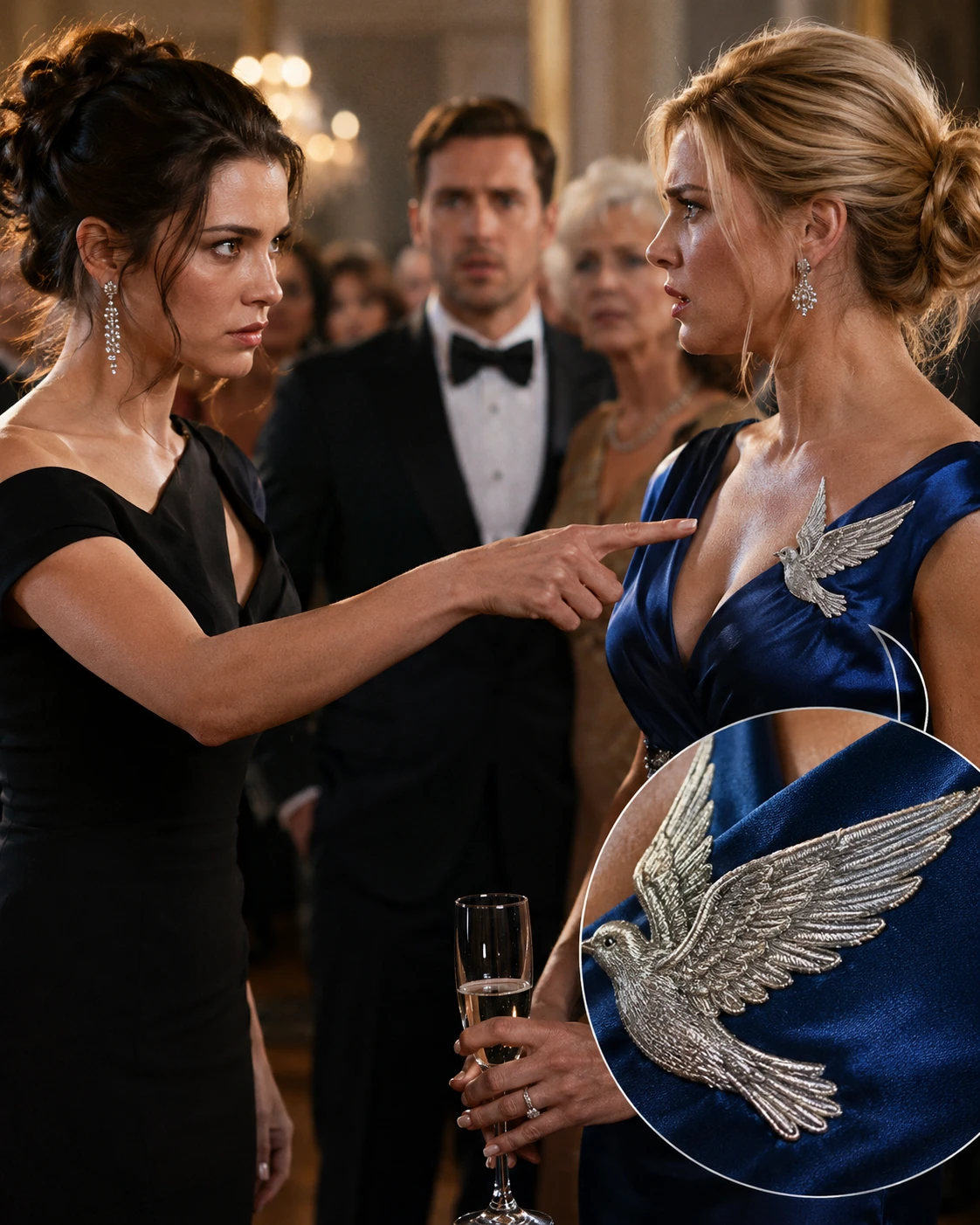
The first time I found Sloane’s earring in his car, Grant said it belonged to his mother.
The second time I found a hotel receipt in his coat, he said Senator Ames had used the suite for a private meeting.
The third time, I stopped asking questions.
Not because I believed him.
Because I had hired a former federal investigator named Camille Hart, and Camille had already started building me a timeline.
A woman can cry, or she can document.
I chose documentation.
For five months, I collected what Grant thought I was too humiliated to look for.
Bank transfers from a Caldwell Holdings subsidiary to Sloane’s shell consulting company.
Hotel footage from Palm Beach, Aspen, and Boston.
Emails from Vivian to the family attorney discussing how to “encourage Ava toward a quiet settlement before the child is weaponized.”
That child was Lily.
My four-year-old daughter who still slept with a stuffed rabbit from the hospital gift shop.
Vivian wanted me quiet because the Caldwell family never survived scandal by apologizing.
They survived by deciding who looked unstable.
The plan had been simple.
Make me seem brittle.
Make Sloane seem fresh, useful, inevitable.
Make Grant appear trapped in a cold marriage with a damaged woman who cared more about foundations than affection.
Then force a divorce.
Then offer me a settlement tied to a custody schedule so cruelly polished it would look reasonable to a judge who had never seen Vivian smile.
There was only one problem.
My father had hated the Caldwells.
Everyone thought the marriage had softened him, but my father, Thomas Whitmore, had built his fortune in medical logistics by assuming every handshake hid a knife.
When I married Grant in the stone chapel at St. Bartholomew’s, my father had given me away with tears in his eyes and a prenup in his briefcase.
Grant signed it because he believed love meant never reading the fine print.
Or maybe because he believed I was too in love to ever use it.
The Whitmore-Caldwell marital agreement had three trigger clauses.
Infidelity with financial misconduct.
Misuse of charitable assets.
Any attempt to alienate custody through false claims, coercion, or fabricated incapacity.
If Grant triggered one clause, he lost the divorce advantage.
If he triggered two, he lost access to the Whitmore trust that propped up Caldwell Holdings after their pharmaceutical division nearly collapsed.
If he triggered all three, his voting rights in the merged company transferred to me until Lily turned twenty-five.
My father had called it a wedding gift.
I had called it cynical.
At twenty-eight, I thought love made contracts unnecessary.
At thirty-five, standing under chandeliers while my husband’s mistress wore a stolen charity dress, I realized my father had been the romantic one.
He had loved me enough to mistrust everyone.
Sloane moved through the ballroom as if she had rehearsed being adored.
She let photographers catch her laughing beside the donor wall.
She touched Vivian’s arm with daughterly intimacy.
She leaned toward Grant in ways small enough to deny and obvious enough to wound.
Then she did something almost impressive.
She walked over to me.
“Ava,” she said, soft and bright.
Her voice had the texture of sugar over glass.
“You look beautiful.”
I looked at the dove on her chest.
“So do you.”
Her smile widened.
“I hope it’s not awkward.”
“It’s not.”
That surprised her.
Her eyes dipped to my black gown, searching for cracks.
“I heard there was a wardrobe issue.”
“A theft,” I said.
She blinked.
The word landed exactly where I wanted it.
Grant appeared at her shoulder.
Vivian appeared at mine.
Rich families do that when threatened.
They arrange themselves like furniture in a room where something expensive is about to break.
Vivian’s diamonds trembled at her throat.
“Ava, darling,” she said, “this is a hospital event, not a personal stage.”
“No,” I agreed.
“It’s a crime scene with a silent auction.”
Grant’s hand closed around my elbow.
Not hard enough to bruise.
Hard enough to remind me he had mistaken access for ownership.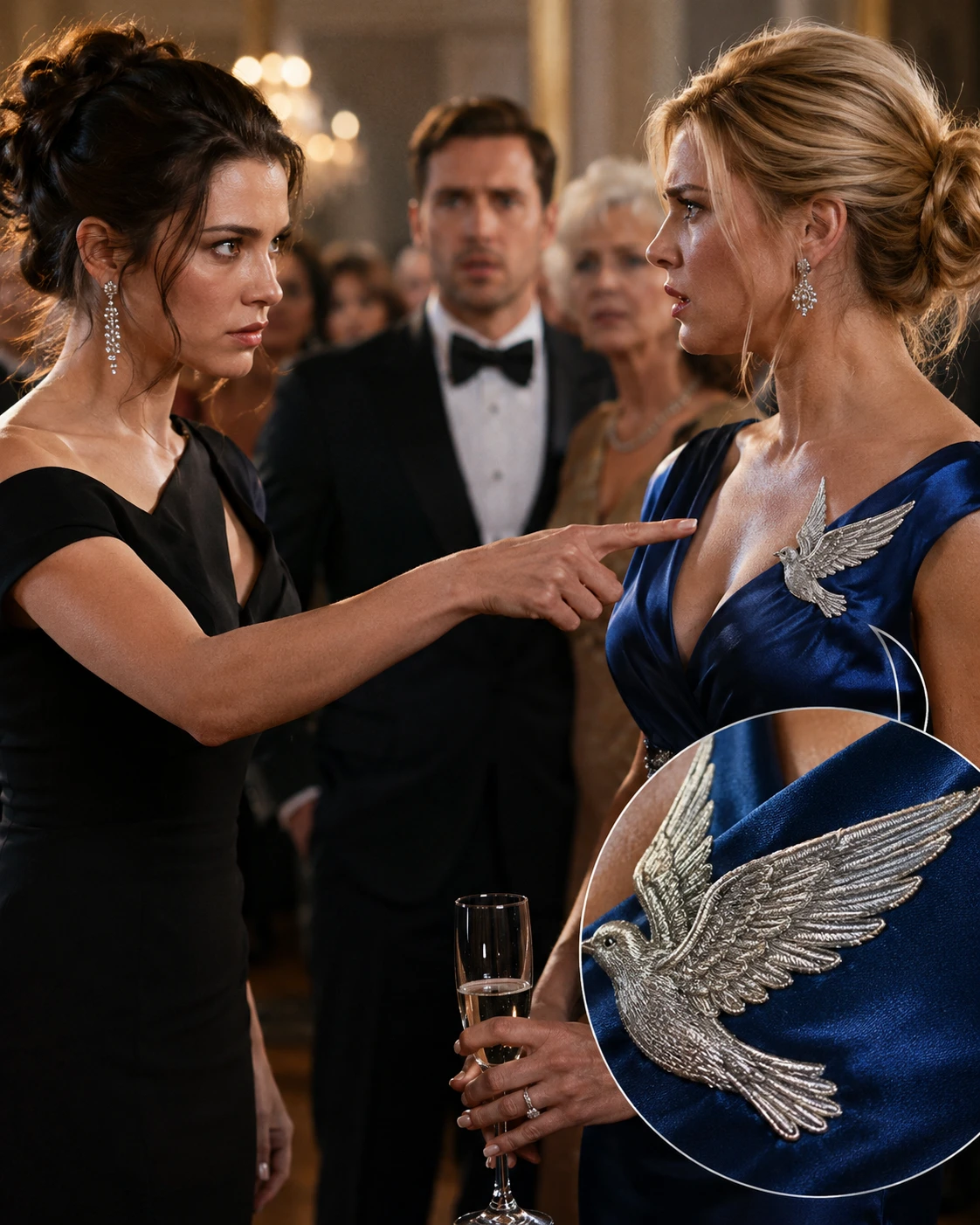
I looked down at his fingers until he let go.
Sloane’s face cooled.
“You should be careful,” she said.
That was the second lie of the evening.
She did not want me careful.
She wanted me afraid.
I leaned close enough for only her to hear.
“You wore the wrong dress to the wrong room in front of the wrong woman.”
For the first time that night, her smile slipped.
Part 3: The Dove Had a Number
The opening speech was scheduled for 8:30.
At 8:17, Nora handed me my phone and whispered, “Camille is in the lobby.”
“Bring her to the green room.”
Grant saw the movement.
So did Vivian.
So did Sloane, because guilt gives people excellent peripheral vision.
The green room behind the ballroom smelled like lilies and electrical cords.
Camille Hart stood by the vanity in a navy suit, silver hair cut sharp at her jaw.
She had the calm of someone who had spent twenty years making powerful men explain why their signatures appeared on things they denied seeing.
She placed a slim folder on the table.
“Hotel security gave us the corridor footage.”
“And?”
“Sloane’s assistant entered your suite at 5:12 using a staff keycard.”
I exhaled through my nose.
“Bought?”
“Borrowed from a housekeeping supervisor who received ten thousand dollars from WestBridge Communications yesterday.”
Sloane’s company.
Of course.
Nora pressed a hand to her mouth.
Camille opened the folder.
“The dress left the suite in a garment bag at 5:19.”
“That proves theft.”
“It proves access.”
She tapped the next page.
“This proves ownership.”
The donor agreement.
The foundation invoice.
The insurance rider.
The RFID registration embedded in the dove appliqué.
Every piece of couture used for the campaign had a tiny tracking tag sewn under its emblem, not because I distrusted the guests, but because donors loved saying words like provenance and authentication after three glasses of champagne.
The dove on Sloane’s chest had a number.
WPFC-001.
Whitmore Pediatric Foundation Campaign.
Property of the foundation until sold by auction.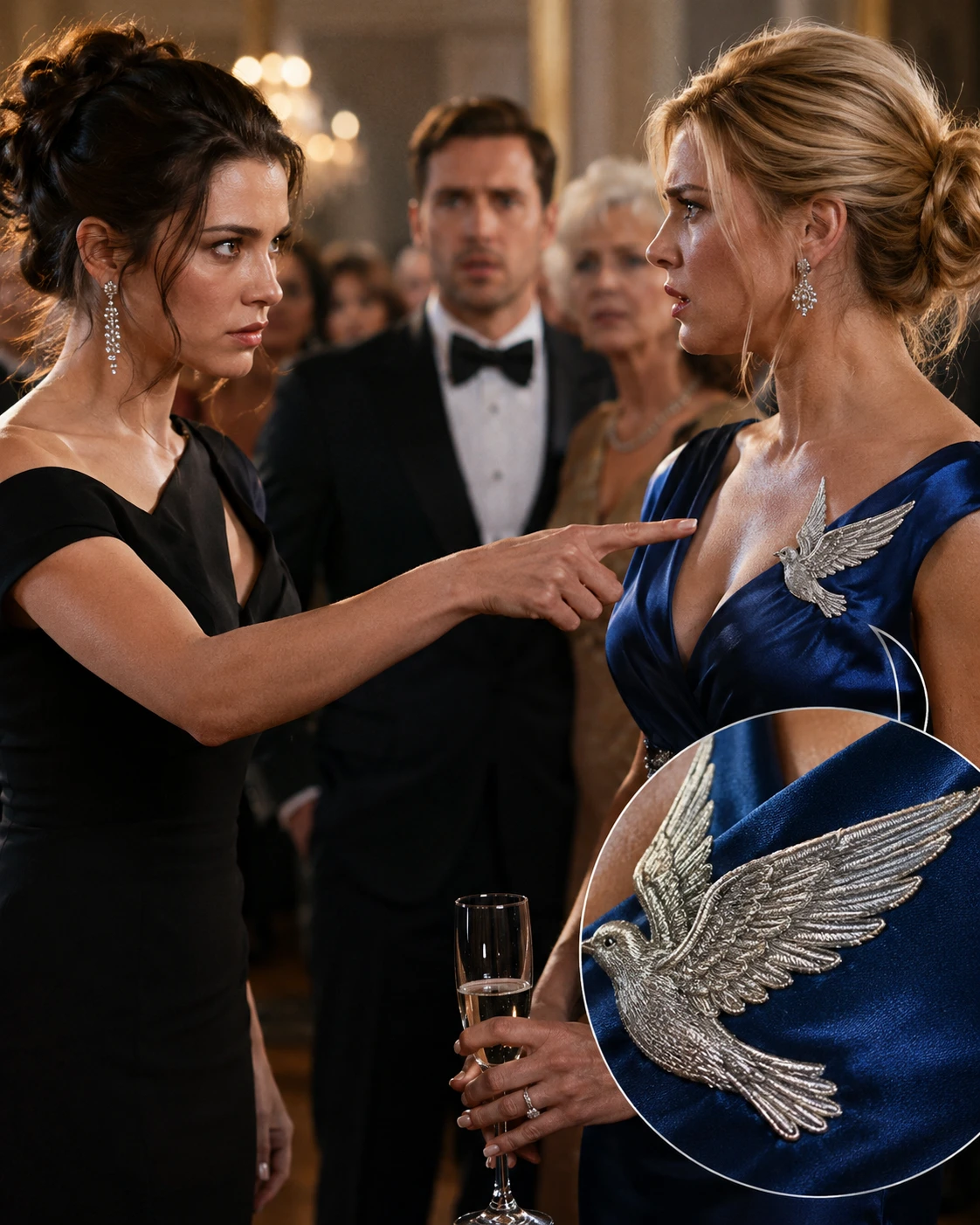
Minimum opening bid.
Two hundred fifty thousand dollars.
I stared at the page and felt something inside me go very still.
Not numb.
Still.
There is a difference.
Numbness is what happens when pain exceeds language.
Stillness is what happens when rage finds architecture.
Camille slid one more envelope across the table.
“This came in at six.”
I knew the lab logo before I touched it.
My stomach tightened.
“Is it admissible?”
“The chain of custody is clean.”
Three weeks earlier, Sloane had posted a photo of a cream-colored baby shoe on Instagram with the caption, “Some blessings arrive right on time.”
She had not named Grant.
She had not needed to.
The comments did it for her.
Vivian had begun talking about “family transitions.”
Grant had stopped pretending he came home late for work.
Then my attorney received a draft custody proposal implying that Lily would need “stability” during the media storm caused by my “emotional response” to Grant’s new child.
New child.
They had turned a pregnancy announcement into a weapon before a heartbeat had even been heard in public.
Camille’s envelope contained the paternity results.
I had not ordered them.
Grant had.
That was the beautiful part.
He wanted proof before he moved Sloane into the Caldwell mansion in Greenwich and forced me out under the pretense of sparing Lily confusion.
He had sent his own sample.
Sloane had sent hers.
The lab sent the result to the account Vivian’s attorney used.
Camille obtained it through discovery tied to the prenup trigger review.
I opened the envelope.
The room did not spin.
My hands did not shake.
Grant Caldwell was not the father.
For one shining second, I almost felt sorry for him.
Almost.
“Who is?” I asked.
Camille’s mouth curved slightly.
“Based on the additional sample submitted under the family office insurance file, probability indicates Mason Reed.”
Nora gasped.
Mason Reed was Caldwell Holdings’ chief financial officer.
Grant’s oldest friend.
Best man at our wedding.
The man who toasted us in the church courtyard while bells rang and my father watched Grant like a man reviewing a bad investment.
I looked at the paper again.
Sloane had not only slept with my husband.
She had been sleeping with the man helping him hide money.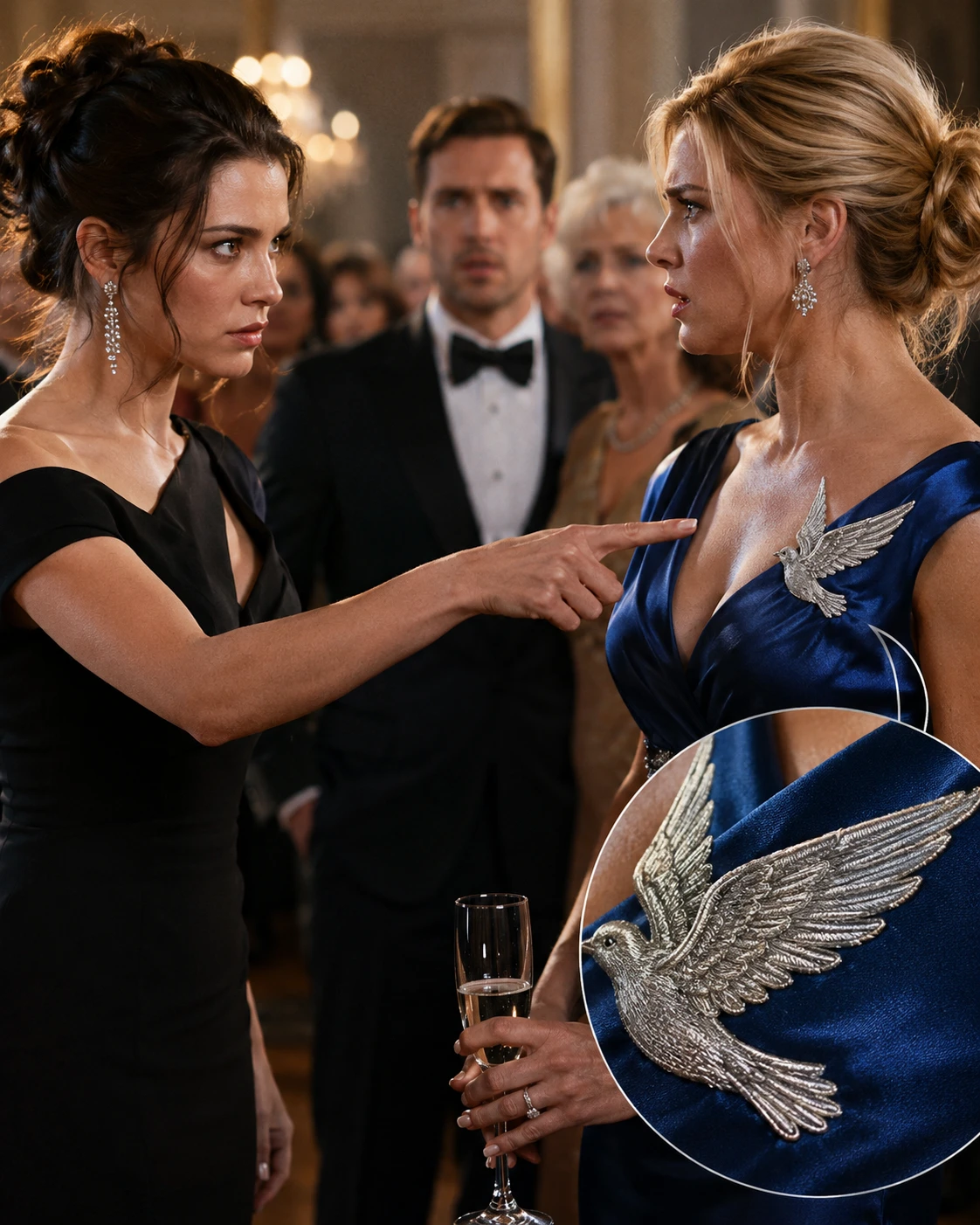
That was not a love triangle.
That was an audit.
Camille placed another sheet beside the paternity report.
“Also, Mason authorized three transfers from the hospital campaign reserve into WestBridge Communications.”
My pulse slowed.
“How much?”
“Seven hundred eighty thousand dollars.”
Nora whispered, “From the children’s hospital?”
Camille looked at me.
“From the restricted fund attached to tonight’s gala.”
There it was.
The third trigger.
Misuse of charitable assets.
Grant had let his mistress wear the dress.
Mason had paid her company with foundation money.
Vivian had planned to use Sloane’s pregnancy to push me out.
And Sloane had walked into my gala wearing proof over her heart.
I closed the folder.
“Call Judge Halperin’s clerk.”
Camille nodded.
“Already done.”
“Call Detective Alvarez.”
“He’s downstairs.”
I looked at Nora.
“Move the auction order.”
“The dress?”
“First item.”
Her eyes widened.
“But Sloane is wearing it.”
“I know.”
At 8:29, I walked back into the ballroom.
Grant met me near the stage stairs.
His face had gone tight around the edges.
“Where were you?”
“Checking the zipper.”
“What does that mean?”
“It means you should have married someone less organized.”
The lights dimmed.
The room quieted.
Three hundred donors turned toward the stage.
Sloane stood near the front beside Vivian, smiling like a woman about to be crowned.
The auctioneer adjusted his microphone.
The hospital president introduced me as if nothing in the world was burning.
I climbed the stairs in my black gown.
The applause rose clean and polite.
I placed both hands on the podium and looked out at the people who had paid fifty thousand dollars per table to be seen caring.
Then I looked at Sloane.
She lifted her chin.
I smiled.
“Good evening,” I said.
“My name is Ava Whitmore Caldwell, and tonight we are here because some children do not get the luxury of waiting.”
The room stilled.
“Some babies are born before their lungs know what to do.”
“Some parents hear a doctor say transport, and they understand that miles can become a death sentence.”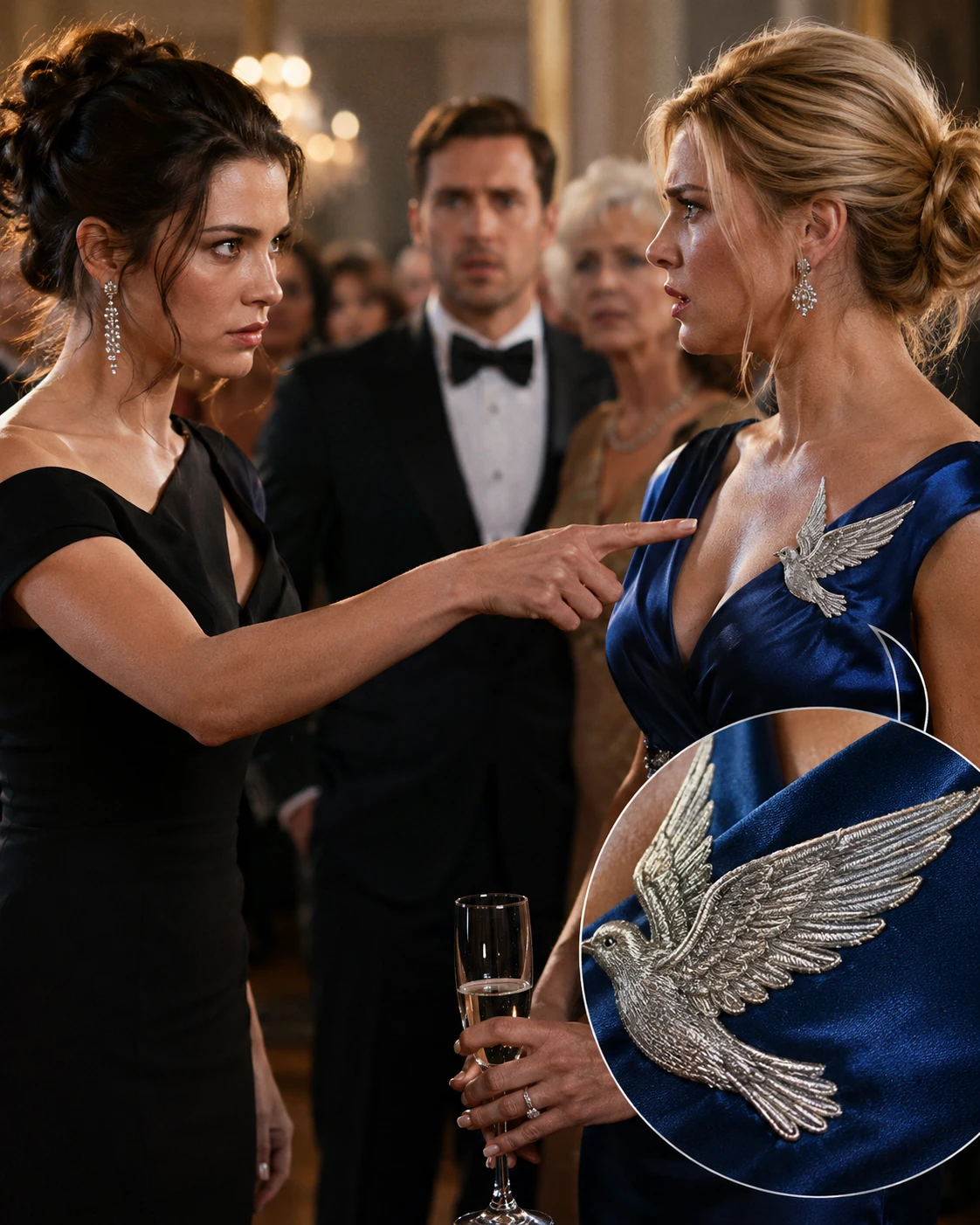
“At Caldwell Children’s Hospital, we are trying to shorten those miles.”
A few heads bowed.
A few glasses lowered.
I let the silence hold.
“That is why the first auction item tonight was commissioned.”
Grant had gone pale.
Sloane’s smile faltered.
“The midnight-blue gown with the silver dove was created exclusively for the Whitmore Pediatric Foundation.”
I clicked the remote.
A photo of the dress appeared on the screen behind me.
The room murmured.
Sloane froze.
“It is not a gift.”
“It is not a loan.”
“It is not a personal wardrobe piece.”
“It is foundation property with an opening bid of two hundred fifty thousand dollars.”
I looked straight at Sloane.
“And tonight, before the auction began, it was removed from my secured suite without authorization.”
The ballroom stopped breathing.
Grant whispered something I could not hear.
Vivian’s mouth opened, then closed.
Sloane laughed lightly.
Too lightly.
Like a woman trying to turn a gunshot into a dropped spoon.
“Ava,” she called, “surely this is a misunderstanding.”
Her voice carried.
Good.
I wanted it to.
I nodded to Nora.
On the screen, security footage appeared.
Sloane’s assistant entering my suite.
The garment bag leaving.
The timestamp.
The staff keycard log.
Then a close-up of the silver dove.
Then the RFID registration.
Then the donor agreement with the ownership clause highlighted.
The murmurs became a wave.
I did not raise my voice.
“Ladies and gentlemen, the woman currently wearing the dress is wearing stolen foundation property.”
Sloane’s face drained white beneath the makeup.
I turned one page in my speech folder.
“And because the restricted campaign funds were also used to pay the company connected to the theft, the matter has been referred to law enforcement and the attorney general’s charities bureau.”
Somewhere near the front, a glass shattered.
Mason Reed had dropped it.
Grant turned toward him.
Mason turned toward Sloane.
Sloane turned toward Grant.
That was the moment the room understood this was not a marriage falling apart.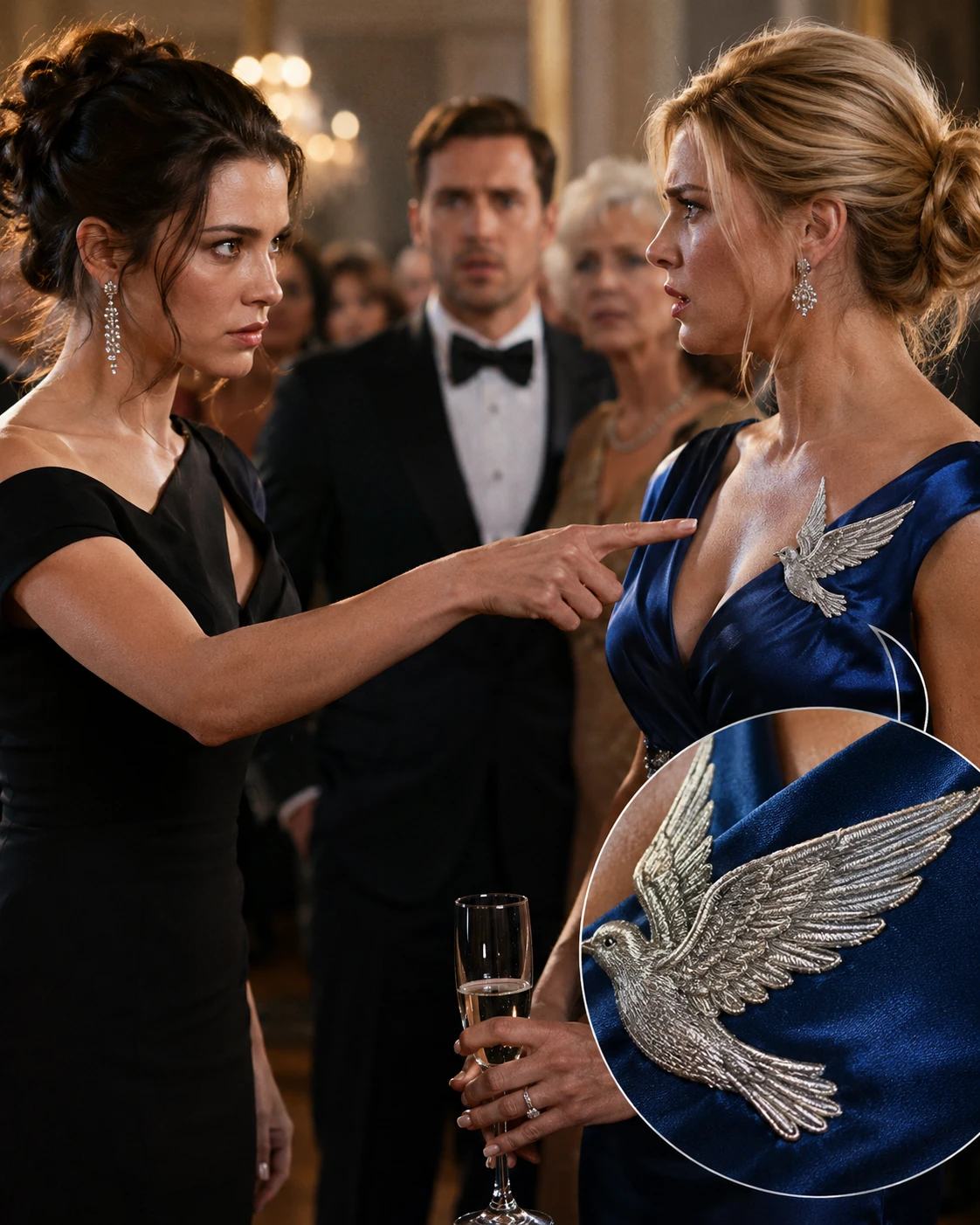
It was a conspiracy collapsing in evening wear.
Part 4: The Gala Became a Courtroom
Detective Alvarez did not storm the ballroom.
That only happens in cheap television.
He entered through the side door with two uniformed officers and a warrant folded in his hand like a dinner napkin.
The donors parted for him the way rich people part for consequences they thought were meant for someone else.
Sloane stepped back.
The dress caught on the heel of her silver sandal.
For one brutal second, she nearly fell.
No one reached for her.
Not even Grant.
That was what broke her composure.
“Grant,” she hissed.
Grant stared at the screen, still processing the paternity report I had not yet shown.
He had the look of a man realizing betrayal was not painful because it was rare.
It was painful because he had believed himself the only person allowed to do it.
Vivian recovered first.
She always did.
“This is grotesque,” she said, loud enough for the nearest tables.
“My daughter-in-law is clearly unwell.”
There it was.
The family script.
The unstable wife.
The emotional woman.
The charity martyr desperate for attention.
I picked up the second folder from the podium.
“Thank you, Vivian.”
Her eyes sharpened.
“Your concern for my mental health is exactly why I asked my attorney to file the custody interference evidence this afternoon.”
The screen changed again.
Emails appeared.
Not full messages.
Just enough.
Vivian to Grant.
We must establish Ava as erratic before mediation.
Vivian to the family attorney.
The hospital obsession helps us.
Vivian to Mason.
Once the pregnancy is confirmed, public sympathy shifts.
A sound moved through the ballroom, softer than a gasp and uglier than a laugh.
It was recognition.
Everyone in that room knew people like Vivian.
Some of them were people like Vivian.
But none of them liked seeing the machinery exposed.
Vivian’s diamonds shook.
“You vindictive little—”
“Careful,” I said.
It came out gentle.
That made it worse.
Grant climbed the stage steps.
“Ava, stop.”
He reached for the microphone.
I moved it out of his reach.
For nine years, I had watched him command rooms with charm, money, and a last name polished by generations of other people’s labor.
Tonight he looked smaller under the lights.
“Ava,” he said, no longer whispering.
“This is our family.”
“No, Grant.”
I looked out at the donors, then back at him.
“This is a hospital.”
A flash popped from a phone near the back.
Then another.
Then a dozen.
The gala was becoming exactly what Grant feared.
Public.
Permanent.
Uncontrolled.
Sloane tried to push past Detective Alvarez.
He held up one hand.
“Ms. West, we need to speak with you regarding the removal of foundation property.”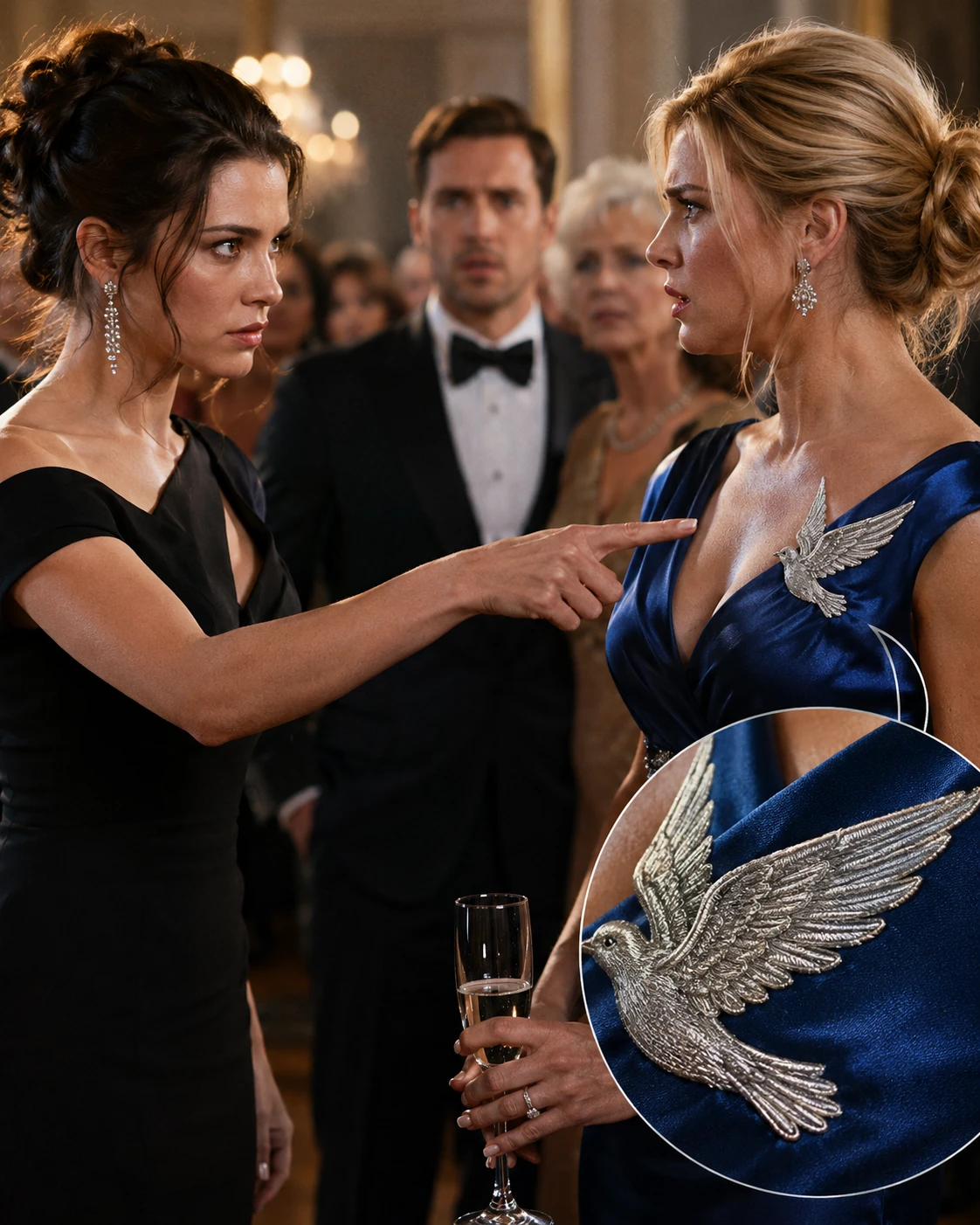
“I didn’t remove anything,” she snapped.
The smugness was gone.
Without it, she looked very young.
“It was given to me.”
“By whom?” he asked.
She looked at Grant.
Grant did not answer.
She looked at Vivian.
Vivian looked away.
That was the thing about being chosen by cruel people.
They only choose you while you are useful.
Sloane’s mouth trembled.
Then she made the mistake desperate people make.
She tried to burn everyone before anyone burned her.
“Grant told me Ava wouldn’t need it.”
The room went silent again.
Grant closed his eyes.
Sloane pointed at him.
“He said she was being phased out.”
A few donors inhaled sharply.
“He said the foundation would be restructured under Caldwell Holdings after the divorce.”
Mason moved toward the exit.
Detective Alvarez’s second officer stepped into his path.
Sloane’s voice climbed.
“Mason said the transfer was temporary.”
There it was.
I did not need to say another word.
She had done what guilty people often do.
She had mistaken confession for defense.
Camille appeared beside the stage with my attorney, Rebecca Saye.
Rebecca wore ivory satin and the expression of a woman who billed in six-minute increments and enjoyed every one of them.
She handed Grant a packet.
He stared at it.
“What is this?”
“Notice of emergency injunction,” Rebecca said.
“Effective pending hearing, you are restrained from accessing Whitmore Pediatric Foundation accounts, Caldwell Holdings restricted charitable divisions, and any custodial decision involving Lily Caldwell without written consent or court order.”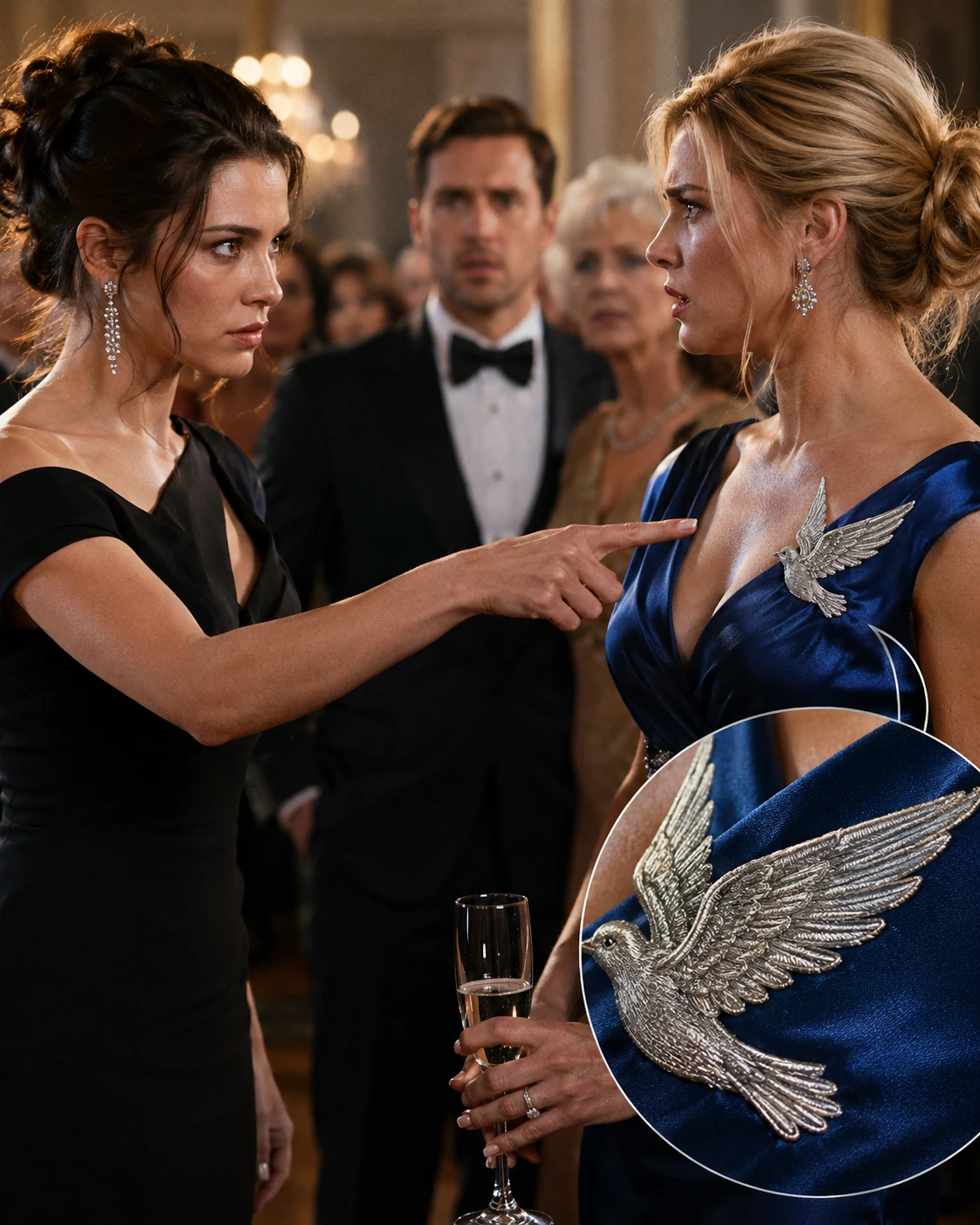
Grant’s face flushed.
“You can’t do this.”
“I didn’t,” Rebecca said.
“The judge did.”
Vivian grabbed his arm.
“Don’t say anything.”
For once, Vivian gave good advice.
He ignored it.
“You think this makes you powerful?” Grant said to me.
His voice cracked just enough for the phones to catch it.
“You think humiliating me in front of everyone makes you strong?”
I looked at him for a long moment.
I thought of our wedding.
The chapel filled with white hydrangeas.
His hand warm around mine.
My father’s face as the vows began.
My own voice promising better or worse, not understanding that worse could have a mistress, a press strategy, and access to your child’s schedule.
“No,” I said.
“I think stealing from sick children makes you weak.”
His expression changed.
Not sadness.
Hatred.
There was the man I had been living with.
Not the charming husband.
Not the public philanthropist.
The man behind the locked doors, furious whenever anyone denied him the right to be forgiven without changing.
Sloane began crying.
Beautifully, at first.
Then badly.
Black mascara touched the edge of the stolen silk.
“You said she’d never fight,” she said to Grant.
I almost thanked her.
Instead, I looked at the auctioneer.
“Shall we begin?”
The poor man blinked like he had been asked to conduct a symphony during an earthquake.
Then one donor stood.
It was Mara, the transport nurse, now director of neonatal outreach.
She had been seated at table twelve in a simple navy dress.
“I bid two hundred fifty thousand dollars,” she said.
The ballroom turned toward her.
She lifted her chin.
“On behalf of the nursing staff.”
A billionaire from Dallas stood next.
“Five hundred thousand.”
Then Mrs. Alden from Palm Beach.
“One million.”
Someone else called, “Two.”
Another, “Three.”
The numbers rose with the strange violence of absolution.
By the time the bidding ended, the dress Sloane could no longer bear to stand in had raised eight point six million dollars.
Enough for the transport unit.
Enough for three years of staffing.
Enough to make every person in that room feel clean again.
Detective Alvarez escorted Sloane out through the side door in a hotel robe Nora had brought from the spa.
The midnight-blue dress was removed as evidence in a private suite with two female officers, my attorney, and a representative from the foundation present.
I never touched it.
I did not want it back.
I wanted it documented.
When Grant was escorted to a smaller room for questioning, Vivian stayed behind.
Her face had collapsed into something almost human.
“You have destroyed this family,” she said.
I stepped down from the stage.
“No, Vivian.”
I looked at the empty place where Sloane had stood.
“I stopped being its landfill.”
Part 5: The Name on the Deed
Three weeks later, the courtroom smelled like rain, wool coats, and old wood.
Manhattan had turned gray.
The kind of gray that makes every window look honest.
Grant arrived with two attorneys, one crisis manager, and no wedding ring.
Vivian arrived in pearls, because some women believe accessories can outvote evidence.
Mason Reed arrived separately and avoided looking at everyone.
Sloane did not arrive at all.
Her attorney appeared for her and explained that Ms. West was cooperating with investigators.
That meant Sloane had traded tears for immunity.
I respected the efficiency.
The hearing was supposed to address temporary custody, foundation access, and the corporate voting injunction.
Grant’s team argued that I had staged a public ambush.
Rebecca argued that Grant had staged a financial one.
Grant’s team argued that my actions proved emotional volatility.
Rebecca submitted six months of medical records, board minutes, therapy attendance, school pickup logs, hospital foundation schedules, and sworn statements from Lily’s pediatrician, teacher, nanny, and therapist.
Then she submitted Grant’s hotel records.
The judge read silently for a long time.
No one enjoys watching a powerful man become paperwork.
Grant stared at me across the aisle.
I felt nothing dramatic.
No lightning.
No ache.
Just the quiet grief of realizing the man you loved had become a stranger long before you noticed the door opening.
Then Rebecca introduced the paternity report.
Grant’s attorney objected.
The judge allowed it for relevance because Grant had used Sloane’s pregnancy in custody negotiations.
The courtroom shifted.
Even the clerk looked up.
Grant did not move.
Vivian did.
Her hand flew to her throat, not from shock, but calculation.
She had known.
I saw it then.
She had known the baby might not be Grant’s, and she had still planned to use it against me.
Bloodline had never mattered to Vivian as much as leverage.
The judge’s voice was even.
“Mr. Caldwell, did you authorize your counsel to reference Ms. West’s pregnancy as a factor in your proposed custodial restructuring?”
Grant swallowed.
“Yes, Your Honor.”
“Were you aware at the time that paternity was disputed?”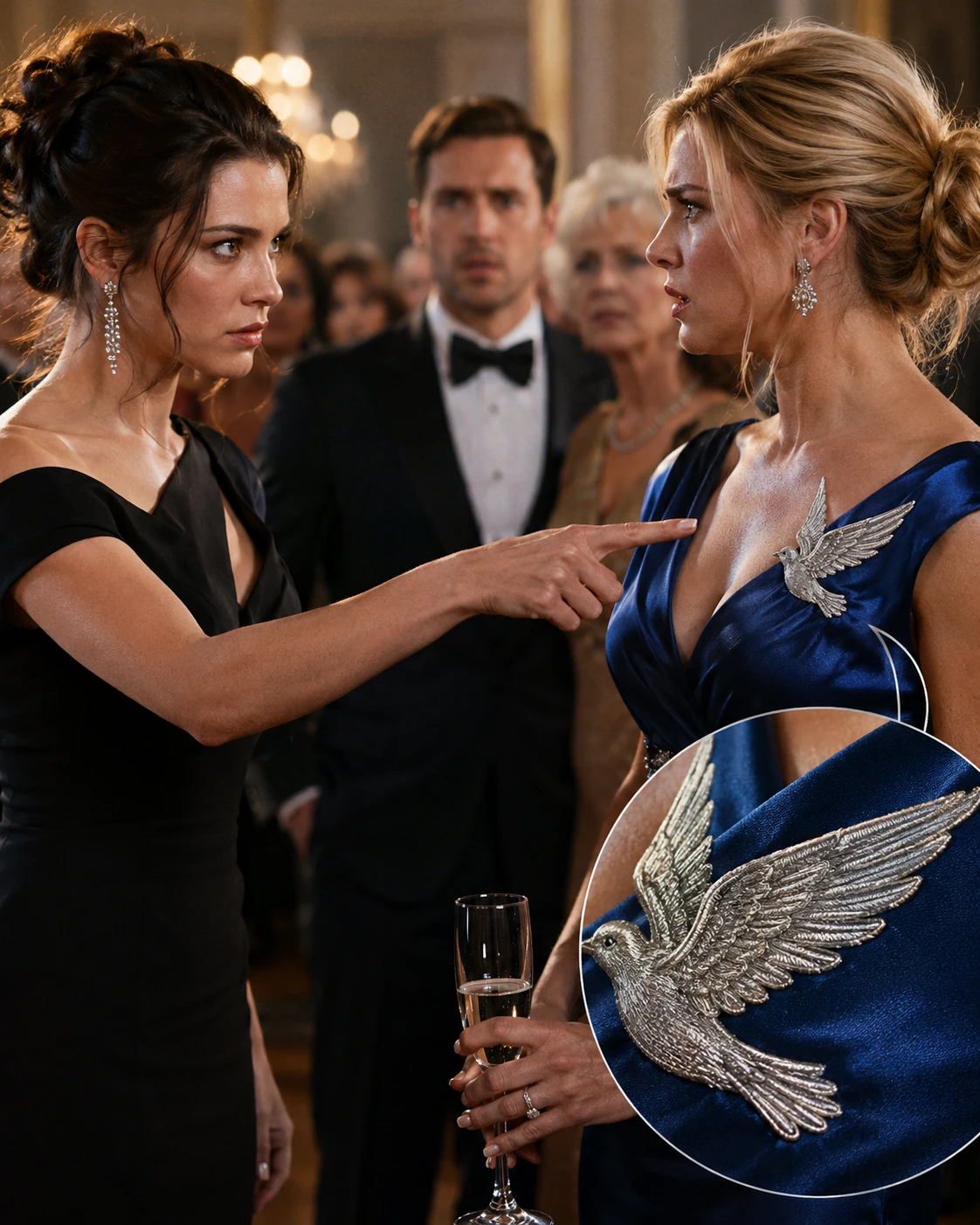
His attorney touched his arm.
Grant hesitated.
That hesitation cost him more than any answer.
The judge wrote something down.
Rebecca rose.
“Your Honor, we also request enforcement of the Whitmore-Caldwell marital agreement’s trigger provisions.”
Grant’s head snapped toward me.
“You wouldn’t.”
It was the first truly honest thing he had said in months.
Not because he thought I legally could not.
Because he thought the girl who married him in a church full of white flowers still lived somewhere inside me, barefoot and hopeful, waiting to be asked nicely.
She did live inside me.
I loved her.
But I no longer let her sign documents.
Rebecca placed the prenup on the evidence table.
The agreement was thick, precise, and ruthless in the way only my father’s love could be.
Clause Twelve.
Financial misconduct connected to extramarital relationship.
Clause Fourteen.
Misuse or attempted diversion of charitable assets.
Clause Seventeen.
Coercive custody interference through false claims of incapacity or instability.
Three locks.
Three keys.
Grant had turned them all himself.
His attorney argued enforceability.
Rebecca cited case law.
The judge asked questions.
The rain tapped the windows like fingernails.
At noon, the court recessed.
I stepped into the hallway and found Vivian waiting beneath a portrait of a dead judge.
She looked smaller without a ballroom around her.
“Ava,” she said.
It was the first time in years she had said my name without sharpening it.
I stopped.
“She is my granddaughter,” Vivian said.
I knew she meant Lily.
“She is.”
“Don’t take her from us.”
I almost laughed.
Not because it was funny.
Because some people only discover mercy after their weapons are confiscated.
“I’m not taking Lily from anyone who loves her safely.”
Vivian’s eyes filled.
I did not look away.
“But you will never use her as collateral again.”
Her mouth tightened.
For a second, the old Vivian returned.
Then it left.
Perhaps age is realizing some doors close quietly and forever.
The judge ruled at four fifteen.
I received temporary sole legal custody with supervised visitation for Grant pending full evaluation.
The foundation injunction remained.
The charitable transfers were referred for expanded investigation.
And the voting rights attached to the Whitmore trust, thirty-eight percent of Caldwell Holdings, transferred to me under the marital agreement until final adjudication.
Grant stood so fast his chair struck the rail.
“This is insane.”
The judge looked over her glasses.
“Sit down, Mr. Caldwell.”
He sat.
That was the moment I knew it was over.
Not the divorce.
Not the investigations.
Not the headlines that would follow.
The marriage.
The illusion.
The spell.
A man who once made me feel chosen had been told to sit, and the world did not end.
Two months later, I walked into Caldwell Holdings as interim voting trustee.
The building rose over Park Avenue in black glass and quiet arrogance.
My heels clicked across the lobby floor Grant had crossed for years as if it belonged to him by birthright.
The boardroom waited on the fortieth floor.
Twelve directors sat around a walnut table.
Some had attended my wedding.
Some had attended the gala.
All of them had suddenly discovered deep respect for governance.
Grant was there as a nonvoting observer.
He looked tired.
Mason had resigned.
Sloane had deleted her social accounts.
Vivian had left Greenwich for Palm Beach, where women go when they want sympathy without proximity.
I placed my folder on the table.
“Good morning.”
No one spoke.
I looked at the company seal on the wall.
Caldwell Holdings had made generations of men feel immortal.
My father’s money had saved it.
My daughter’s future had exposed it.
And a stolen dress had opened the door.
“Our first order of business,” I said, “is the permanent separation of the pediatric foundation from Caldwell corporate control.”
One director cleared his throat.
“That may reduce brand visibility.”
I smiled.
“Good.”
He blinked.
I turned the page.
“Our second order of business is a forensic audit of all charitable partnerships for the last seven years.”
Grant’s face tightened.
“Our third is a leadership review.”
The room became very still.
Power does not always roar when it changes hands.
Sometimes it is a woman in a black suit reading from an agenda while men realize the door is locked behind them.
After the meeting, Grant followed me to the elevator.
“Ava.”
I pressed the button.
He looked older than thirty-eight.
Maybe betrayal ages the person who commits it once the applause stops.
“I loved you,” he said.
The elevator doors opened.
I looked at him.
“No, Grant.”
My voice did not shake.
“You loved being loved by me.”
He flinched.
I stepped inside.
Before the doors closed, he said, “What am I supposed to do now?”
For years, I might have answered.
I might have softened.
I might have handed him a map out of the wreckage he made.
This time, I let the silence raise him.
The doors slid shut.
Conclusion: The Dress Became a Wing
The midnight-blue dress never returned to my closet.
After the investigation ended, the court released it to the foundation.
The silk had been cleaned, repaired, and sealed behind museum glass in the lobby of Caldwell Children’s Hospital, though we changed the name within the year.
It became Whitmore Children’s Medical Center.
Not because I wanted my name on a building.
Because I wanted Lily to grow up seeing that names can be reclaimed.
The display plaque did not mention Sloane.
It did not mention Grant.
It did not mention scandal, theft, or the ballroom where three hundred people learned that cruelty can look beautiful under chandeliers.
The plaque simply read:
The Dove Dress.
Auctioned to fund neonatal transport.
Proof that what is stolen from children can be returned with interest.
Sometimes mothers stood in front of it with babies sleeping against their shoulders.
Sometimes nurses took photos beside it after night shifts.
Sometimes little girls pressed their hands to the glass and asked why the bird was silver.
I always told Lily the same thing.
“Because silver shines best after it survives fire.”
She was five when the first transport unit arrived.
White and silver, with a tiny dove painted near the back doors.
Mara let Lily place the first sticker inside the cab.
Lily chose a glitter star.
Then she climbed into my arms and asked if the ambulance was for babies like she used to be.
“Yes,” I said.
“For babies like you.”
She thought about that.
Then she whispered, “So they can come home?”
I kissed her hair.
“So they can come home.”
The divorce finalized quietly the following spring.
Grant received supervised visitation that expanded slowly after therapy, parenting classes, and the kind of humility money cannot purchase quickly.
I did not hate him forever.
Hate is still a room you share with someone.
I preferred fresh air.
Sloane had her baby in June.
Mason was the father.
I knew because her attorney sent a corrected statement during settlement negotiations, and because Manhattan gossip has never respected sealed documents.
I did not celebrate.
A child is not a punchline.
A woman can be accountable without being cursed.
That took me longer to learn than revenge did.
Vivian sent Lily birthday gifts from Palm Beach.
I returned the ones with conditions attached.
I kept the books.
One day, maybe Lily would know the whole story.
Not the internet version.
Not the gala version.
Not the version where I became a marble statue in a black dress and ruined everyone with one speech.
The real version.
The version where I was afraid.
The version where I checked on my daughter before I checked on my evidence.
The version where I stood in the hotel bathroom for exactly forty-two seconds, pressed both hands to the sink, and reminded myself that calm is not the absence of pain.
Calm is pain that has chosen a direction.
Years later, people still asked me about the gala.
They asked what it felt like to expose my husband and his mistress in front of the most powerful donors in New York.
They wanted me to say it felt good.
It did not.
It felt like cutting a rope while still remembering the day you tied it.
It felt like watching a house burn and knowing you were the one who finally stopped pretending it was warm.
But afterward, when the smoke cleared, there was my daughter.
There were the babies transported through storms.
There were nurses with better equipment.
There were mothers who got to arrive at hospitals still holding hope.
There was a foundation no Caldwell could touch.
There was my father’s signature on a document I once resented and now understood as a blessing written in legal ink.
There was me.
Not ruined.
Not rescued.
Not waiting.
Just alive, well-dressed, and finally impossible to misplace.
On the first anniversary of the gala, I stood in the hospital lobby alone.
Snow moved beyond the glass doors.
The Dove Dress glowed under its soft light, midnight-blue and silver, no longer a weapon, no longer evidence, no longer mine.
A little boy in a red coat stopped beside me and pointed.
“Is that a princess dress?” he asked.
I smiled.
“No.”
He tilted his head.
“What is it?”
I looked at the silver dove, stitched exactly over the heart.
“It’s a warning,” I said.
Then I thought of Lily laughing upstairs in the pediatric playroom.
I thought of the transport unit waiting in the ambulance bay.
I thought of every woman who had ever been told not to make it ugly when the truth was already bleeding on the floor.
I bent closer to the boy and smiled again.
“And a promise.”
He accepted that, because children understand more than adults think they do.
Then he ran back to his mother.
I stayed a moment longer.
Outside, snow softened the city.
Inside, the hospital hummed with fragile, stubborn life.
I touched the glass once, not the dress.
The glass.
The boundary.
The proof that beautiful things can survive being mishandled when the right hands finally protect them.
Then I turned away and walked toward my daughter’s laughter.
