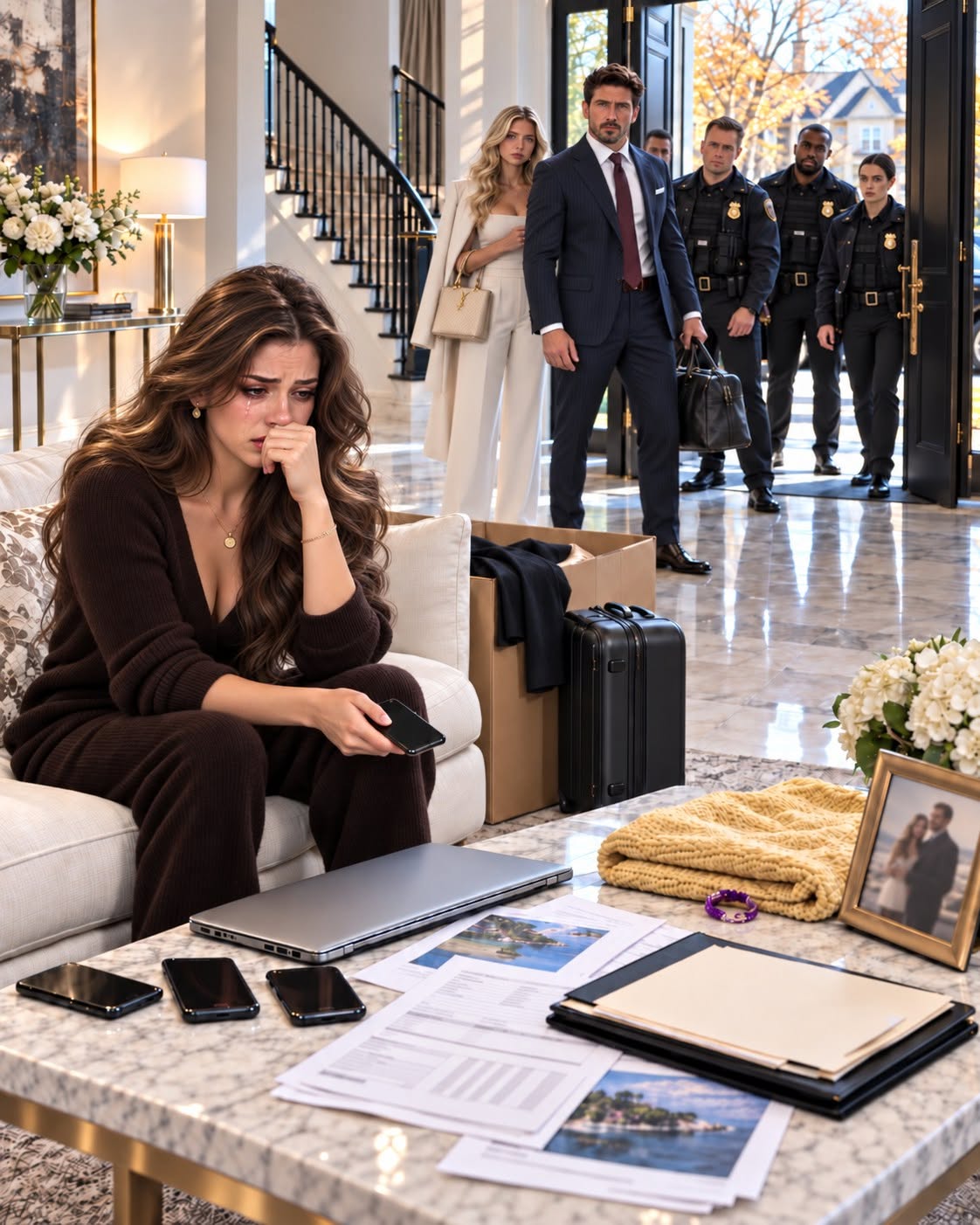
At 2:47 in the morning, my seven-year-old daughter was fighting for her life while my husband rejected my call.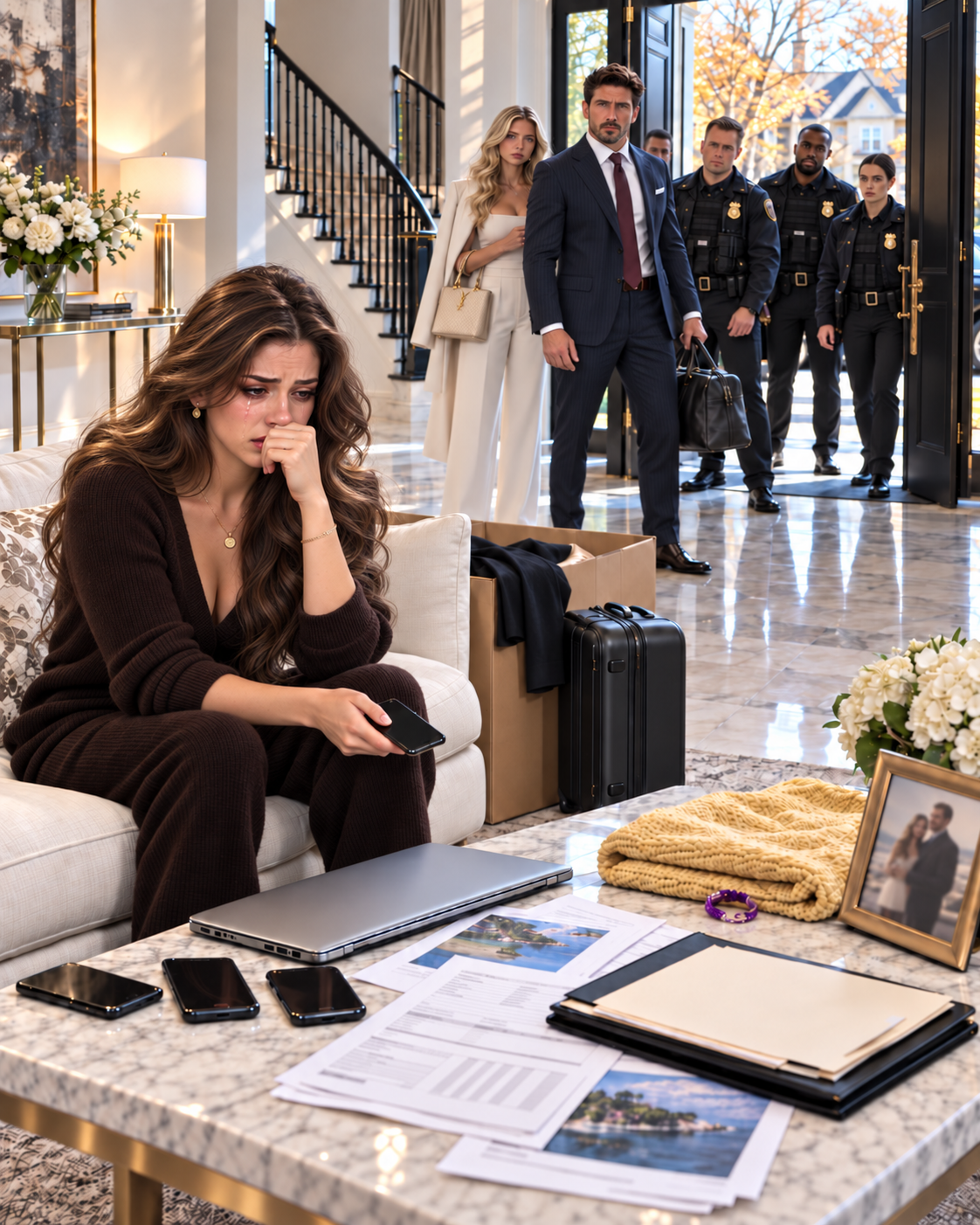
By sunrise, I had called David fifty-one times.
The only answer he gave me was a text telling me to stop suffocating him.
At 6:14 that evening, our daughter died.
And fourteen days later, my husband came home from the Bahamas expecting to find the same wife, the same house, and the same life waiting for him.
He found none of them.
PART 1 — FIFTY-ONE CALLS
Lily had gone to bed complaining that her head hurt.
Nothing about the evening had looked like the beginning of the worst day of my life.
She had eaten half a grilled-cheese sandwich, left tomato soup untouched because she said it smelled funny, and curled against me on the couch beneath the yellow blanket she had owned since kindergarten.
At nine-thirty, I checked her temperature.
101.8.
I gave her the medication our pediatrician had recommended for fevers, brought her water, and sat beside her while she complained that the light from the hallway hurt her eyes.
By midnight, her fever was over 104.
At 12:26, she vomited.
At 12:41, she struggled to sit up.
At 12:53, when I asked her to touch her chin to her chest, she cried.
Something inside me turned cold.
I called the pediatrician’s overnight line.
The nurse listened for less than thirty seconds before saying, “Mrs. Vance, take her to the emergency room now.”
I threw clothes over my pajamas, wrapped Lily in her coat, and carried her barefoot through the garage because she said her legs felt strange.
She weighed forty-seven pounds.
I remember that because only six months earlier she had proudly announced the number after stepping on our bathroom scale.
“I’m almost fifty pounds, Mommy.”
That night, forty-seven pounds felt impossibly heavy.
At the hospital outside Chicago, everything accelerated.
A nurse took Lily from my arms.
A doctor asked questions.
Another nurse cut open the sleeve of Lily’s pajama top to place a line.
Someone said lumbar puncture.
Someone else said bacterial meningitis.
Then someone said ICU.
I called David the first time at 1:18 a.m.
Straight to voicemail.
I called again at 1:21.
Again at 1:24.
Again at 1:29.
His phone rang twice and disconnected.
David was in the Bahamas.
Officially, he was there because he had become “burned out.”
That was the phrase he had started using after Christmas.
Burned out from work.
Burned out from responsibility.
Burned out from everyone needing something from him.
He had become particularly irritated whenever I pointed out that being Lily’s father was not something he could temporarily resign from.
Two weeks earlier, he had announced that he was taking a yacht trip.
“A reset,” he called it.
Alone, according to him.
No work calls.
No social media.
No family interruptions.
I had asked him whether two weeks was excessive when we had a seven-year-old daughter at home.
He had stared at me across our kitchen island as though I were unreasonable.
“This is exactly why I need it, Sarah. You can’t let me breathe.”
I learned later that Julianne Mercer had boarded the yacht with him.
Julianne was twenty-five.
She had been David’s fitness instructor for eight months.
The first time I met her, she had placed one hand on David’s shoulder while laughing at something he said and kept it there a little too long.
When I mentioned it later, David laughed.
“She touches everyone. It’s her job.”
Apparently, so was sleeping with married clients.
At 2:47 a.m., a physician named Dr. Patel pulled me into a small consultation room.
He was young enough that I noticed it.
That is one of the strange things grief preserves.
Not important details.
Random ones.
His glasses.
A coffee stain on his white coat.
The fact that one of his shoelaces was untied.
“Your daughter is extremely ill,” he said carefully.
I already knew.
“What do you need me to do?”
“We’re treating aggressively. But if there’s another parent—”
“I’m calling him.”
David declined the next three calls.
The screen actually showed it.
Call rejected.
That was different from no answer.
He was seeing my name.
He was choosing not to pick up.
I typed:
LILY IS IN THE ICU. CALL ME NOW.
No response.
I sent a photograph.
Lily beneath white hospital blankets.
IVs.
Oxygen.
Monitors.
The little purple bracelet she had made at summer camp still hanging around her wrist.
No response.
By four in the morning, I had called twenty-six times.
By five, thirty-nine.
At 5:38, I received his first message.
Sarah, stop.
I stared at those two words until the letters blurred.
I called again.
Rejected.
At 5:41, another message appeared.
I told you I’m doing a digital detox.
This constant need to reach me is exactly what I meant when I said I feel suffocated.
Unless someone is literally dying, handle it until I get back.
I don’t know how long I looked at that sentence.
Unless someone is literally dying.
Behind the glass wall twenty feet away, six medical professionals were trying to keep his daughter alive.
I typed back:
SHE IS.
Then:
DAVID, LILY MAY DIE.
Then:
PLEASE CALL HER.
At 6:02, he responded.
Not with a call.
With another text.
I can’t keep doing this with you.
I need two weeks where every crisis isn’t made into my responsibility.
I’m turning my phone off.
Do not contact the yacht.
The yacht.
Not me.
Not our daughter.
Not the hospital.
The yacht needed protection from interruption.
My older sister, Rebecca, arrived fifteen minutes later wearing mismatched shoes and a coat over her pajamas.
She found me sitting outside Lily’s room with David’s message glowing on my phone.
She read it.
Her face changed.
“Where is he?”
“The Bahamas.”
“With her?”
I looked up.
Rebecca had suspected Julianne before I had allowed myself to.
“Yes.”
She sat beside me.
For once, she didn’t tell me what I should do about my marriage.
She simply took my phone out of my hand.
“Stop calling him.”
“I have to tell him.”
“You have told him.”
“He’s her father.”
“And you have told him.”
“What if she wakes up and asks for him?”
Rebecca swallowed.
“Then we’ll deal with that if it happens.”
Lily did wake up once.
At 10:17 that morning.
Barely.
Her eyes opened halfway.
I leaned over her immediately.
“Mommy’s here.”
Her lips moved.
I moved closer.
“What, baby?”
“Cold.”
That was all.
I rubbed her hand between mine.
“You’re okay. Mommy’s right here.”
It was the last thing she ever said to me.
By lunchtime, doctors had stopped using phrases like we’re hopeful.
At four, they spoke about catastrophic swelling.
At five-thirty, they asked whether there were relatives I wanted present.
Rebecca called my mother.
I did not call David again.
The final count on my phone was fifty-one.
At 6:14 p.m., a monitor changed its tone.
A nurse closed the curtain.
Dr. Patel stood near Lily’s bed.
I held my daughter’s right hand while the machines stopped doing what her body could no longer do.
I kept smoothing her hair.
Every night after a nightmare, Lily would climb into my side of the bed and whisper, “Hair, Mommy.”
She wanted me to stroke the hair away from her forehead until she fell asleep.
So that was what I did.
I smoothed her hair.
Again.
Again.
Again.
Until Dr. Patel quietly told me she was gone.
I don’t remember screaming.
Rebecca later told me I didn’t.
I simply leaned forward, rested my forehead against Lily’s, and whispered the same sentence over and over.
“I’m here.”
The nurse eventually covered Lily to her shoulders.
Her hand began losing warmth inside mine.
At 7:03, my phone vibrated.
For one irrational second, I thought it might be David.
It was an automated school message reminding parents that Friday was Pajama Day.
I laughed.
A horrible, broken sound.
Then I switched my phone off.
David wouldn’t learn that his daughter was dead through a phone call he could reject.
If being unreachable was what he wanted, I decided he could have it.
Completely.
PART 2 — THE FUNERAL WITHOUT HER FATHER
For the next four days, people kept asking me decisions no mother should have to make.
White flowers or pink?
Open casket or closed?
Which photograph for the memorial card?
What dress should Lily wear?
Did she have a favorite song?
Would we prefer burial or cremation?
I discovered that grief was full of paperwork.
Forms did not care that my daughter had died.
The funeral home still needed signatures.
The cemetery still needed authorization.
The school still needed notification.
Insurance still wanted numbers.
I answered all of it because there was nobody else.
Rebecca offered to make the decisions for me, but somehow choosing Lily’s blue dress mattered.
It was the one with tiny embroidered daisies she had worn to my mother’s birthday.
David had missed that dinner too.
Work.
Always work, until suddenly work was not the thing keeping him away.
I sent him one final message the morning after Lily died.
Not because I wanted him.
Because someday I wanted proof that I had done everything humanly possible.
Lily died yesterday at 6:14 p.m.
Her funeral is Monday at 10 a.m. at St. Matthew’s.
I will not contact you again.
The message showed as delivered.
No answer came.
I later discovered David had seen it.
Julianne would admit that much months afterward.
He simply had not believed me.
According to her, he had stared at the screen and said, “She’s trying to force me home.”
That sentence eventually reached me through attorneys.
For a long time, I wished it hadn’t.
Monday morning brought freezing rain.
Lily’s elementary-school teacher stood beneath a black umbrella beside twenty-three parents from her class.
Her principal came.
Her soccer coach came.
The elderly woman from three houses down who gave Lily peppermint candies every Halloween came.
Dr. Patel came.
He stood quietly in the back and left before I could thank him.
David’s parents flew in from Arizona.
His mother, Elaine, collapsed against me when she saw the small white coffin.
“Where is he?”
I looked at her.
She knew the answer.
Her son was still in the Bahamas.
David’s father, Richard, turned away and covered his mouth with his hand.
Neither defended him.
That mattered more than I expected.
At the cemetery, rain ran down my face until nobody could tell whether I was crying.
The minister finished.
People began leaving.
I stayed.
Rebecca eventually touched my shoulder.
“Sarah.”
“I need five minutes.”
“I’ll wait by the car.”
After everyone walked away, I crouched beside the flowers.
There are moments in life when your body seems to understand something your mind refuses to accept.
My hands kept wanting to reach for Lily.
To pull her up.
Put her in the car.
Turn the heater on.
Tell her we’d had enough of this terrible place.
Instead, I pressed my palm against the cold wood for a final time.
“I’m sorry Daddy wasn’t here.”
The words left my mouth before I could stop them.
Then I corrected myself.
“No.”
I wiped rain from my face.
“That wasn’t mine to apologize for.”
It was the first clear thought I had experienced in four days.
David’s absence belonged to David.
His choices belonged to David.
His cruelty belonged to David.
I would not spend the rest of my life cleaning his failures and calling it love.
That afternoon, I returned to the house.
Four million dollars of limestone, glass, white oak, marble, and silence.
David had insisted on buying it three years earlier.
He loved what the address said about him.
He loved the circular driveway, heated garage, wine room, gym, and enormous windows facing the ravine behind the property.
Lily loved one thing about it.
The window seat in her bedroom.
I went upstairs and sat there until darkness fell.
Her stuffed rabbit was on the pillow.
A library book was open facedown beside the bed.
I picked it up and almost heard her scolding me.
“Mommy, you’re breaking the spine.”
I closed it properly.
Then I saw David’s office door across the hallway.
It was locked.
That wasn’t unusual.
David had always locked it when he traveled.
For years, I had accepted his explanation.
Confidential client information.
Sensitive company documents.
Privacy.
But grief does strange things to fear.
It burns away the parts that once kept you obedient.
David had left me alone in a hospital while our child died.
I no longer cared whether he thought I was violating his privacy.
His emergency key was in the drawer beneath the built-in wine refrigerator.
I had known that for years.
I had simply never used it.
The office smelled faintly of cedar and the expensive cologne David wore to meetings.
His desk looked immaculate.
Laptop gone.
Files aligned.
Pens arranged.
Nothing personal except one photograph of Lily.
Not us.
Just Lily.
For a few seconds that photograph nearly destroyed me.
He kept her picture on his desk.
He simply hadn’t answered when she was dying.
I opened the drawers.
Tax files.
Property documents.
Company materials.
Nothing unexpected.
Then I noticed the bottom drawer did not pull out as far as the others.
I removed it.
Behind the drawer was a narrow steel lockbox built into the cabinet.
David had never mentioned it.
The small key on his office key ring fit.
Inside was a second laptop.
Three prepaid phones.
Two passports.
And a hardcover biography of Winston Churchill.
The book felt wrong when I picked it up.
Too heavy.
Its pages had been cut away to form a compartment.
Inside were bank statements.
Not our bank.
Not any bank I recognized.
Cayman Islands.
British Virgin Islands.
Singapore.
Numbers so large I read them twice.
$814,000.
$1.2 million.
$463,500.
There were company names I had never heard.
Mariner Ridge Holdings.
Blue Reef Procurement.
Caldera Advisory.
One page listed David as beneficial owner.
Another contained transfer instructions.
Then I found something that made my hands stop shaking.
My name.
Sarah Vance — authorized guarantor.
I had never seen the account.
I had never signed the document.
The signature beneath my name looked almost perfect.
Almost.
David had spent twelve years watching me sign birthday cards, mortgage documents, school permission slips, checks, tax returns.
He knew exactly how my S curved.
But he always missed the tiny upward line at the end of my last name.
I sat down at his desk.
I looked at the dead phone beside me.
Then at Lily’s photograph.
I did not feel powerful.
I did not feel clever.
I felt tired.
But underneath the exhaustion, something steady appeared.
A boundary.
I photographed every document exactly where I found it.
Then I called the attorney who had handled our house purchase and estate planning.
Her name was Margaret Cole.
She answered on the third ring.
“Sarah? I heard about Lily. I am so unbelievably sorry.”
“Thank you.”
I stared at the offshore statement.
“I need help.”
“With the estate?”
“With David.”
Silence.
“What happened?”
“I think my husband has been hiding money.”
Another silence.
“How much?”
“I don’t know yet.”
I looked at the stack.
“But enough that I’m afraid to guess.”
Margaret’s voice changed from condolence to professional focus without losing its gentleness.
“Don’t move anything. Don’t confront him.”
“Photograph what you can. Do not access accounts that aren’t legally yours.”
“And Sarah?”
“Yes?”
“If you’re thinking of divorcing him, say that clearly now.”
I looked across the hallway toward Lily’s room.
“I’m divorcing him.”
It was the first decision I made after burying my daughter.
And unlike almost everything else that week, it didn’t hurt to say.
PART 3 — THE LOCKED DRAWER
The next morning, Margaret introduced me to a forensic accountant named Nathan Bell.
Nathan was sixty-two, soft-spoken, and built like someone’s favorite grandfather.
He wore reading glasses on a cord and carried a battered leather briefcase that looked twenty years older than David’s entire office.
For two hours, he asked questions.
Did I know Mariner Ridge Holdings?
No.
Had I authorized any international accounts?
No.
Was I aware David had personal ownership interests in outside procurement companies?
No.
Did I recognize the wire amounts?
No.
Then Nathan reached one document and stopped.
“What does your husband do again?”
“Chief operating officer of Vance Meridian.”
Vance Meridian was a regional logistics and medical-supply distribution company David had built with two college friends.
The business employed almost four hundred people in Illinois and Wisconsin.
I owned no part of it.
David had always been very clear about that.
He had started the company before we married.
Nathan placed two sheets beside each other.
A domestic transfer.
An offshore deposit.
Same amount.
Same day.
“What is it?”
“I don’t know yet.”
He studied the papers.
“But I know what it resembles.”
“What?”
“Vendor diversion.”
I stared at him.
He explained simply.
If a company expected to pay a legitimate supplier $300,000, an executive with enough authority could potentially route that payment through a vendor he controlled, inflate invoices, split transactions, or create a shell company.
One fake bill would be suspicious.
Dozens could become a system.
“How bad?”
“I don’t know.”
He tapped the papers.
“And until I do, don’t assume anything.”
For the first time that week, someone told me not to jump to the worst conclusion.
I appreciated him for that.
Unfortunately, the worst conclusion kept getting easier to prove.
The second laptop required a password.
I did not attempt to bypass it.
Margaret told me not to.
Instead, she arranged for copies of documents I legally possessed and moved quickly to protect what was unquestionably mine.
The house had been purchased during our marriage, but most of the down payment—$1.6 million—had come from an inheritance left to me by my father and documented separately.
Several paintings belonged to my mother.
The dining table had been my grandmother’s.
Much of the furniture had been purchased with money from my inheritance account before funds were commingled.
Margaret’s first concern was not punishing David.
It was preventing assets from disappearing.
Within forty-eight hours, she filed for divorce and sought emergency financial restrictions based on evidence that David might be moving marital funds offshore.
The judge issued a temporary order preventing either of us from selling, transferring, hiding, or encumbering major marital assets.
I followed it exactly.
That distinction mattered to me.
David had spent years doing whatever he wanted and explaining afterward.
I would not become him.
The things I removed from the house were either mine, Lily’s, or specifically cleared through counsel.
We photographed everything.
Catalogued everything.
Logged every box.
Meanwhile, Nathan kept working.
On Thursday afternoon, he called.
“Sarah, are you alone?”
I was sitting on Lily’s bedroom floor sorting school papers.
“Yes.”
“I need you to come to Margaret’s office.”
My stomach tightened.
“Why?”
“Because this is no longer just a divorce matter.”
Two hours later, Nathan placed a yellow legal pad in front of me.
He had identified eighteen transfers totaling more than $6.4 million over four years.
Some moved through companies David controlled.
Some appeared linked to Vance Meridian vendors.
Several were routed through offshore accounts before returning to the United States as loans or consulting revenue.
Then Nathan showed me the document carrying my forged signature.
It guaranteed obligations associated with a shell company.
“If this had collapsed,” he said, “someone might have tried to argue you were involved.”
I felt nauseated.
“Can he do that?”
“He already did.”
Margaret leaned forward.
“But the forged signature helps you more than it hurts you if we document it properly.”
I thought of David’s text.
Every crisis isn’t my responsibility.
Apparently millions of dollars in secret transfers were.
My signature simply had to take responsibility when necessary.
Nathan slid another document forward.
One of the companies—Blue Reef Procurement—had paid $186,000 in twelve months to something called JM Performance Consulting.
The mailing address belonged to Julianne Mercer.
For several seconds, nobody spoke.
I almost laughed.
Not because it was funny.
Because the number felt obscene beside the $35 pair of soccer cleats Lily had wanted that fall.
David had told her to wait until Christmas because “money didn’t grow on trees.”
He had spent ten minutes lecturing our seven-year-old about financial responsibility.
Meanwhile, Julianne’s company had received $186,000.
“What was she consulting on?”
Nathan shook his head.
“No idea.”
“She teaches Pilates.”
“Then she’s unusually well compensated for consulting on logistics procurement.”
That evening, I went home and opened Lily’s closet.
Her tiny shoes lined the floor.
Soccer cleats.
Rain boots.
Pink sneakers with marker on one side because she had tried writing her name herself.
I sat on the carpet.
That was when I finally cried about David.
Not the affair.
Not the money.
Not even the missed calls.
I cried because I remembered hundreds of small moments when I had explained his absence to Lily.
Daddy’s busy.
Daddy had a meeting.
Daddy wanted to come.
Daddy loves you even when he can’t be here.
I had spent years translating David’s selfishness into a language our daughter could survive.
And in the end, she had died while I was still trying to bring him back to her.
The following morning, Margaret called.
“Nathan spoke with someone.”
“Who?”
“A federal contact.”
I closed my eyes.
“Am I in trouble?”
“No.”
That was not the answer I expected.
She continued.
“But there’s already an investigation.”
I opened my eyes.
“What?”
“Apparently Vance Meridian has been under review for months because of irregular vendor payments. They did not have what they needed to directly connect the offshore entities to David.”
I looked toward his locked office.
“And now?”
“Now they may.”
The man who arrived that afternoon introduced himself as Special Agent Marcus Hale.
He did not burst through my door.
He did not threaten me.
He did not make dramatic speeches.
He sat at my kitchen table, accepted the coffee Rebecca made, showed me his credentials, and explained what he could and could not tell me.
There had been an investigation.
He could not discuss all of it.
My documents appeared relevant.
He wanted to know exactly how I found them.
I told him.
Every detail.
The funeral.
The locked office.
The drawer.
The lockbox.
The statements.
The second laptop.
When I finished, he remained silent for a moment.
Then he asked, “Mrs. Vance, did your husband know you had found these materials?”
“No.”
“Does he know you’ve filed for divorce?”
“No.”
“When is he returning?”
I checked the itinerary David had left in our kitchen before he departed.
“Next Thursday.”
“Does he have access to private aircraft?”
“Not personally.”
“Could he travel internationally from the Bahamas?”
“Obviously.”
Agent Hale nodded.
“Do not contact him about any of this.”
“I wasn’t planning to.”
That night, David finally texted me again.
Nine days after our daughter died.
Hope you’ve calmed down.
I’ll be home Thursday morning.
We need to talk about boundaries because this trip has made a lot clear to me.
I read it once.
Then handed the phone to Rebecca.
She stared at me.
“He still doesn’t know?”
“He knows exactly what I told him.”
“Sarah—”
“He chose not to believe it.”
Twenty minutes later, another message appeared.
Julianne is coming back through Chicago because her connection changed.
Don’t make it weird if you see her.
Rebecca read that one and actually whispered, “Oh my God.”
I felt nothing.
That frightened me at first.
Then I understood.
There are injuries so deep that anger cannot reach them.
David had gone past the point where I needed him to understand me.
He could believe whatever he wanted.
Reality would be waiting when he arrived.
PART 4 — FOURTEEN DAYS
The house slowly emptied.
Not in rage.
Not with movers ripping televisions off walls while I imagined David’s reaction.
That would have been easier.
Instead, every object required a decision.
Keep.
Store.
Donate.
Leave.
Lily’s room was the hardest.
I kept almost everything.
Her books.
Her blankets.
The lamp shaped like a moon.
The box of seashells from our trip to Michigan.
Twenty-three friendship bracelets.
Every handwritten note she had ever slipped under my bedroom door.
Mommy I love you 100000000.
Can we have pancakes tomorrow?
Sorry I yelled about bath.
I packed those myself.
Rebecca asked where I was going.
I had rented a three-bedroom townhouse twenty minutes away.
Not because I could not afford something larger.
Because I no longer wanted to live inside a monument to David’s ambition.
The townhouse had a small backyard.
A narrow kitchen.
A fireplace that worked badly.
And sunlight in the upstairs hallway around four every afternoon.
When I first walked through it, I imagined Lily leaving her backpack on the stairs.
That nearly made me reject it.
Then I imagined myself surviving there.
I signed the lease.
David called once during those fourteen days.
Not me.
His mother.
Elaine was sitting at my dining table when her phone rang.
She looked at the screen.
“My son.”
My chest tightened.
“You can answer.”
“I don’t know what to say to him.”
“That’s between you and him.”
She stepped into the living room.
I heard only pieces.
“Yes.”
“No.”
“She told you.”
A long silence.
Then Elaine’s voice broke.
“No, David. Don’t you dare say that.”
Another silence.
“Because I stood beside her coffin.”
I stopped packing.
Elaine began crying.
“Yes. Your daughter.”
Silence.
“No, I’m not lying.”
Then, louder:
“Your wife called you fifty-one times!”
The next thing I heard was Elaine saying, “No. You listen to me.”
I walked upstairs.
Some conversations did not belong to me anymore.
Twenty minutes later, she found me folding Lily’s sweaters.
“He says he didn’t understand.”
I kept folding.
“He says he thought you were manipulating him into ending the trip.”
I placed a sweater in the box.
“He says you two had been fighting so much that he assumed—”
“Elaine.”
She stopped.
I looked at her.
“I don’t need his explanation.”
Her face crumpled.
“He’s my son.”
“I know.”
“And I love him.”
“I know.”
“But I don’t know who he is right now.”
I nodded.
“I know that too.”
“He wants to call you.”
“No.”
“Sarah—”
“I spent twelve hours begging him to answer me.”
My voice stayed quiet.
“I won’t spend one minute helping him feel better about why he didn’t.”
Elaine looked down.
After a moment, she helped me fold sweaters.
David began leaving voicemails after that.
I never answered.
The first was confused.
“Sarah, Mom told me. I don’t understand what happened.”
“Call me.”
The second was angry.
“Why would you send something like that by text? What is wrong with you?”
The third sounded frightened.
“Please tell me this isn’t real.”
The fourth was crying.
“I didn’t know.”
The fifth tried to rewrite history.
“You know we were having problems. You know I thought you were trying to drag me home.”
The sixth blamed the signal.
The seventh blamed the trip.
The eighth blamed Julianne.
The ninth blamed me again.
By the twelfth message, he had reached the sentence I knew was coming.
“I made a mistake.”
A mistake.
Forgetting milk was a mistake.
Leaving the garage door open was a mistake.
Missing a school recital because a meeting ran late was a mistake.
Ignoring fifty-one calls, rejecting them deliberately, reading that your child might die, ordering your wife not to contact you, and remaining on a yacht with your mistress was a sequence of choices.
I saved every voicemail for my attorney.
Then stopped listening.
Agent Hale contacted me twice.
The second time, he asked whether David had changed his return schedule.
“No.”
“Flight?”
I gave him the information I had.
Then he said something unexpected.
“Mrs. Vance, I want to be clear about Thursday.”
I waited.
“What happens with your husband is not something you’re causing.”
I almost laughed at the irony.
Apparently even the federal agent understood something I had spent years forgetting.
“You provided information.
Investigators verified information independently.
Decisions regarding charges are made based on evidence, not your marriage.”
“Thank you.”
“I mean that.”
“So do I.”
Wednesday night, I slept in the townhouse for the first time.
There was almost no furniture.
A mattress.
Two lamps.
Boxes.
Rebecca stayed with me.
At 3:12 a.m., I woke from a dream that Lily was calling from the hospital.
For three seconds, I believed she was alive.
Then the room came back.
I sat on the floor beside the mattress and cried until my throat hurt.
Rebecca appeared in the doorway.
“You okay?”
“No.”
She sat beside me.
Neither of us tried to change the answer.
At sunrise, I showered.
Put on black trousers.
A gray sweater.
No makeup.
No wedding ring.
Margaret had arranged for the process server.
Agent Hale had arranged the rest.
I did not know every detail.
I didn’t need to.
By eight-thirty, I drove back to the old neighborhood and parked in my neighbor Susan’s driveway.
Susan had known Lily since birth.
When I told her what was happening, she simply opened the garage and said, “Stay as long as you need.”
From her front window, I could see our house.
My former house.
The driveway looked strange without my car.
Inside, three men waited.
Two Illinois State Police officers.
And Special Agent Hale.
A thick leather folder sat on the entry table.
At 9:17, a black SUV turned onto the street.
My stomach tightened.
David was home.
PART 5 — THE HOUSE HE THOUGHT WOULD WAIT
The SUV stopped beneath the bare oak tree at the end of our driveway.
David climbed out first.
He looked tan.
That detail almost made me physically sick.
Our daughter had gone from fever to funeral while sunlight browned his skin.
He wore white sneakers, navy trousers, sunglasses, and the expensive watch I had bought him for our tenth anniversary.
Julianne climbed out from the passenger side.
She had a large shopping bag in one hand.
A straw hat hung from her other wrist.
Even from across the street, I could see David smiling at something she said.
For one irrational second, the scene looked ordinary.
Two people returning from vacation.
Luggage.
Tan skin.
Duty-free shopping.
A driver unloading suitcases.
Then David looked at the house.
His smile faded slightly.
No wreath on the door.
No car in the driveway.
No lights in the front rooms.
He said something to Julianne.
She shrugged.
The driver left.
David unlocked the front door.
From Susan’s window, I could no longer see him.
Later, Agent Hale told me what happened.
David stepped into the foyer and called my name.
“Sarah?”
Silence.
He walked farther.
The living room was almost empty.
The paintings my mother had given me were gone.
My grandmother’s rug was gone.
The piano Lily had taken lessons on was in storage.
David apparently stared for several seconds.
Then he laughed.
Not because anything was funny.
Because arrogance sometimes laughs when reality first refuses to cooperate.
He called upstairs.
“Sarah, seriously?”
Julianne remained near the door.
David put down his suitcase.
“This trip was exactly what our marriage needed,” he said loudly. “If this is some dramatic separation thing, we’re not doing it.”
Then Special Agent Hale stepped out from the hallway.
The two state officers appeared behind him.
David stopped.
According to Hale, that was the first moment he seemed truly afraid.
“Mr. Vance?”
David looked between the badges.
“Yes?”
“David Michael Vance?”
“Yes.”
Hale opened the leather folder.
“I’m Special Agent Marcus Hale.”
David glanced at Julianne.
“What is this?”
“We have a federal warrant for your arrest.”
Julianne dropped her shopping bag.
David did not move.
Hale continued.
The charges read differently in the actual documents than they would later in newspaper headlines.
Wire fraud.
Conspiracy.
Money laundering.
Forgery-related allegations tied to financial instruments.
Other counts remained under investigation.
David finally said, “There has to be a mistake.”
Hale had probably heard that sentence a thousand times.
He simply said, “Turn around and place your hands behind your back.”
“Wait.”
One of the state officers moved closer.
David’s voice sharpened.
“Do you know who I am?”
Across the street, Susan exhaled.
“Apparently not as well as he thinks they do.”
I said nothing.
David started looking through the empty foyer as though I might step out and fix this for him.
That had always been my job.
Fix the schedule.
Fix the dinner.
Fix the school issue.
Fix the uncomfortable conversation.
Fix his parents’ hurt feelings.
Fix Lily’s disappointment.
Fix David’s mistakes before anyone else saw them.
But I was not in the house.
He tried another question.
“Where is my wife?”
Hale did not answer.
David turned toward Julianne.
She had backed against the front door.
“What did you do?” he asked her.
Her face changed.
“Me?”
“Did you tell somebody something?”
“I don’t even know what this is.”
“Blue Reef.”
Julianne went pale.
That reaction was apparently significant enough for one of the officers to look at Hale.
She shook her head quickly.
“David, no.”
“Shut up.”
“Don’t tell me to shut up.”
The polished couple who had enjoyed fourteen days at sea began turning on each other before David was even handcuffed.
There was no satisfaction in watching it.
That surprised me.
For two weeks, I had imagined this morning as a finish line.
It wasn’t.
Nothing ended because David was finally afraid.
Lily was still dead.
Her bedroom was still empty.
I still had to wake up the next morning.
David was brought outside at 9:31.
His hands were behind him.
No sunglasses now.
He looked toward the street.
Then he saw me.
Even from Susan’s house, I watched recognition hit him.
“Sarah!”
I did not move.
He called again.
“Sarah!”
Hale guided him toward an unmarked vehicle.
David twisted enough to look at me.
“Please!”
That word nearly broke something inside me.
Not because I wanted to help him.
Because Lily had deserved to hear it.
Please answer.
Please come home.
Please be her father.
Instead, the first desperate please David Vance offered during those fourteen days was for himself.
I walked outside.
Susan touched my arm.
“You don’t have to.”
“I know.”
Rain from the night before still darkened the pavement.
David watched me cross the street.
His face looked older.
“Sarah.”
I stopped twenty feet away.
“What happened?”
I stared at him.
For a moment I genuinely did not understand the question.
Then I realized he was not asking about the arrest.
He meant Lily.
“What happened to her?”
Everything inside me became still.
“Meningitis.”
He closed his eyes.
“Oh God.”
“She woke up once.”
His eyes opened.
“Did she—”
“No.”
His mouth trembled.
“No what?”
“She didn’t ask for you.”
I had not planned to say it.
But it was true.
He looked as if I had struck him.
“She said she was cold.”
He began crying.
I had seen David cry exactly three times in twelve years.
At our wedding.
When his father had heart surgery.
The day Lily was born.
Now he cried in handcuffs in our driveway.
“I didn’t know.”
“You did.”
“Sarah, I swear—”
“I told you she was in the ICU.”
“I thought—”
“I told you she might die.”
“You and I were fighting.”
“I sent you a picture of her attached to machines.”
“I thought you were trying to get me home.”
“Yes.”
My voice cracked for the first time.
“I was trying to get you home.”
He had no answer.
“You were her father.”
“I know.”
“No.”
I shook my head.
“You know now.”
The distinction landed.
David lowered his face.
“I should have been there.”
“Yes.”
“I’ll never forgive myself.”
“That isn’t my problem anymore.”
His head lifted.
“Sarah, please. Not like this.”
“How else?”
“Let me explain.”
“You had twelve hours.”
He stared at me.
“I gave you fifty-one chances to explain why the yacht mattered more than your daughter.”
“I didn’t understand.”
“You rejected the calls.”
“I was angry.”
“So was I.”
“I thought you were controlling me.”
“So you punished me by ignoring Lily?”
“No.”
“But that’s what you did.”
His shoulders collapsed.
Behind him, Julianne stood beside an officer, pale and silent.
For the first time, I looked directly at her.
She opened her mouth.
I raised one hand.
“Don’t.”
She closed it.
I had nothing to say to Julianne.
She had betrayed no vows to me.
She had not promised to answer when our child needed her.
That belonged to David.
He started again.
“Sarah, the money—”
“I don’t care.”
That seemed to shock him more than anything.
“What?”
“I care that you forged my name because my attorney says I need to care.
I care about protecting myself.
I care about making sure innocent people don’t lose their jobs because of what you did.”
I swallowed.
“But do you want to know what I think about when someone says your name?”
His face tightened.
“I think about an ICU room at 5:41 in the morning.”
“Sarah—”
“I think about reading the words ‘Unless someone is literally dying’ while your daughter was literally dying.”
He sobbed once.
A raw sound.
“And that has nothing to do with six million dollars.”
Hale stepped closer.
“We need to go.”
David looked panicked.
“Sarah, wait.”
“I waited.”
I looked toward the empty house.
“For years.”
Then I turned around.
That was the last conversation I had with my husband outside a lawyer’s office.
The arrest made local news that afternoon.
Vance Meridian placed David on immediate leave.
Within weeks, the board terminated him.
His two partners cooperated with investigators and publicly stated that they had not known about the offshore entities.
Nathan eventually traced more than eight million dollars through related accounts.
Not all of it was stolen.
Some consisted of hidden income.
Some involved company money.
Some had been routed through transactions complicated enough that even months later attorneys argued over classifications.
Julianne’s consulting company became part of the investigation.
She was never charged with the crimes David ultimately admitted to.
Her lawyers maintained that David had represented all payments as legitimate.
I never spent time deciding whether I believed her.
That story belonged to her.
Mine was already heavy enough.
David eventually entered a plea agreement.
The legal process lasted more than a year.
People often imagine justice as a single dramatic moment.
Handcuffs.
A verdict.
A sentence.
It isn’t.
Justice is meetings.
Documents.
Postponements.
Attorneys.
Voicemails.
Forms.
Dates moved three months because someone’s calendar is full.
By then, I understood paperwork better than I wanted to.
The divorce concluded before the criminal case did.
Because of the documented inheritance used for the house and the financial misconduct, my attorneys protected far more than David had expected.
The house was eventually sold.
I did not want it.
David’s lawyers wanted money from it.
Investigators wanted clarity about what funds had touched what assets.
I wanted only the boxes containing Lily’s life.
On the day the sale closed, Margaret asked whether I felt relieved.
“No.”
“Sad?”
“No.”
She smiled gently.
“What do you feel?”
I thought about it.
“Finished.”
That was close enough.
CONCLUSION — THE CALL I STOPPED WAITING FOR
A year after Lily died, I woke at 2:47 a.m.
Exactly the time Dr. Patel had told me how sick she was.
For months, I had dreaded that anniversary.
I expected my body to remember before my mind did.
It did.
I opened my eyes in the townhouse and knew immediately why I was awake.
For several minutes, I lay in darkness.
Then I went downstairs.
Lily’s yellow blanket was folded over the back of the couch.
I had almost put it into storage.
I was glad I hadn’t.
I wrapped it around my shoulders and made tea.
The townhouse was no longer empty.
There were photographs on the walls.
Books on shelves.
A dining table Rebecca and I found at an estate sale.
Plants I was terrible at keeping alive.
Shoes beside the back door.
A chipped blue mug Lily had painted when she was five sat on the kitchen windowsill holding pencils.
I had learned that moving forward did not require removing her.
That had been one of my greatest fears.
For the first months after she died, any moment of happiness felt like betrayal.
The first time Rebecca made me laugh, I cried immediately afterward.
The first morning I realized I had slept through the night, guilt followed me until lunch.
Eventually, a grief counselor named Dr. Evans told me something I wrote down afterward.
“Loving your daughter and surviving your daughter are not opposites.”
It took months before I believed her.
I returned to work part-time.
I started volunteering twice a month with a parent-support program at the hospital where Lily died.
Not because I had become wise.
Mostly, I sat beside people.
Sometimes that was enough.
Dr. Patel remained there.
The first time he saw me in the hallway wearing a volunteer badge, he stopped.
“Mrs. Vance?”
“Sarah.”
He smiled sadly.
“Sarah.”
I thanked him for trying to save my daughter.
He looked down.
“We wanted more time.”
“So did I.”
That was all we said.
David sent letters from federal custody.
At first, I returned them unopened.
Later, my attorney suggested keeping them because one mentioned financial matters.
I began scanning them for anything legally relevant.
Most contained the same words rearranged into different paragraphs.
Sorry.
Grief.
Mistake.
Please.
Family.
Forgiveness.
In one letter, he wrote six pages about the moment his mother told him Lily was dead.
I stopped halfway through.
His experience of discovering her death was not a burden I was required to carry.
Another letter said he dreamed about the fifty-one calls.
He wrote that sometimes in the dream he answered the first one.
Sometimes the tenth.
Sometimes the fiftieth.
Every version ended with him reaching the hospital before she died.
I cried after reading that one.
Not for our marriage.
For the alternate life that did not exist.
The one where David picked up.
The one where Lily heard her father’s voice.
The one where I didn’t sit beside a dying child wondering whether the man who helped create her was deliberately rejecting us.
Forgiveness became something people asked about more often than I expected.
David’s mother asked once.
His attorney hinted at it.
A mutual friend said, “Holding anger only hurts you.”
I hated that sentence.
People often rush grieving women toward forgiveness because female anger makes rooms uncomfortable.
Eventually, I found my own answer.
I did not wake every morning hating David.
I did not spend my evenings imagining revenge.
I did not want him tortured.
I did not need to watch him suffer.
But I also did not need to call what he did forgivable simply to prove I had healed.
Peace and reconciliation were not the same thing.
Neither were peace and absolution.
I could put down the anger without picking David back up.
On what would have been Lily’s ninth birthday, Rebecca came over with a chocolate cake.
For the first year after her death, I had been afraid birthdays would become only monuments to absence.
Instead, we invited my mother, Elaine, Richard, and three of Lily’s closest school friends with their parents.
We told stories.
Her friend Sophie remembered Lily hiding peas inside a napkin at lunch.
Her teacher remembered how Lily once corrected the spelling on a classroom poster and then apologized to the poster.
Richard told the story of teaching her to fish and pretending not to notice when she secretly returned every worm to the garden because she felt sorry for them.
We laughed until we cried.
Then cried until we laughed again.
Elaine brought a small box.
“I found this at our house.”
Inside was a photograph.
David holding newborn Lily.
He was twenty-nine.
Exhausted.
Terrified.
Completely in love.
For several seconds, I could not breathe.
“I’m sorry,” Elaine said quickly. “Maybe I shouldn’t have—”
“No.”
I touched the edge of the photograph.
“I’m glad you did.”
Because that man had existed too.
That was one of grief’s crueler truths.
David had loved Lily.
And David had failed her.
Both things could be true.
The good memories did not erase the final betrayal.
The betrayal did not rewrite every good memory into a lie.
I placed the photograph in Lily’s memory box.
Not because I wanted David back in my life.
Because he had been part of hers.
That distinction gave me peace.
After everyone left, I carried the cake plates into the kitchen.
My phone was charging beside the sink.
For years, that device had controlled my nervous system.
Would David call?
Would he answer?
Would he be late?
Would he cancel?
Would he come home?
Would he choose us?
I looked at the screen.
No missed calls.
Nothing waiting.
And for the first time, the silence felt gentle.
I walked upstairs to the small room where I kept Lily’s things.
Not a shrine.
A room.
Her books.
A few toys.
Her yellow raincoat.
The purple bracelet from the hospital.
I sat by the window and opened the memory box.
At the bottom lay the printout Margaret had once told me to keep.
My phone records from the night Lily went into the hospital.
Fifty-one outgoing calls to David Vance.
I traced the first line with my finger.
1:18 a.m.
Then the last.
5:58 a.m.
For a long time, I had seen those calls as evidence of his abandonment.
That night, I finally saw something else.
They were evidence that I had stayed.
I had called.
I had fought.
I had carried Lily into the hospital.
I had signed the forms.
I had asked the questions.
I had held her hand.
I had stayed until the last heartbeat.
David had spent years telling me that I was too much.
Too worried.
Too emotional.
Too demanding.
Too suffocating.
But when our daughter needed someone, all the parts of me he complained about were the parts that refused to leave her alone.
I folded the call record and returned it to the box.
Then I picked up the photograph of Lily grinning through two missing front teeth.
“I was there,” I whispered.
That was the sentence I had needed all along.
Not I saved her.
I couldn’t.
Not I fixed it.
I couldn’t.
Not I made him understand.
That no longer mattered.
Just:
I was there.
David lost his company, his freedom for a time, his marriage, his reputation, and most of the fortune he had risked everything to build.
But none of those were the consequence that haunted him most.
Years later, according to Elaine, he still woke some nights hearing a phone ring.
Fifty-one calls from the wife he accused of suffocating him.
Fifty-one opportunities to answer.
Fifty-one chances to become the father Lily needed before it was too late.
I don’t know whether he ever forgave himself.
I stopped needing to know.
Because Lily’s story did not end on a yacht.
It did not end with offshore accounts.
It did not end in our empty four-million-dollar house when federal agents put her father in handcuffs.
For me, Lily’s story lived in a yellow blanket, a chipped blue mug, badly hidden peas, rescued fishing worms, friendship bracelets, and a little girl’s habit of asking me to smooth the hair from her forehead after nightmares.
David spent years believing the worst thing I could do was refuse to forgive him.
He was wrong.
The worst thing, for him, was far quieter.
I finally stopped waiting for him to answer.
