The text had been simple, just seven words, but they were enough to make my hands shake so hard I nearly dropped my phone. “Mom, can we have dinner? I miss you.”
I stared at the screen for a long time. It had been 384 days since I last spoke to Chloe. 384 days since Julian, her husband, had told me I was “toxic” and “overbearing” for suggesting that he shouldn’t be gambling with their mortgage money. Chloe had stood there, silent, looking at the floor, and I had left. I hadn’t seen her since.
But now, she missed me.
I spent three hours getting ready. I put on the green dress Chloe had bought me for my 50th birthday, the one she said brought out my eyes. I bought a bottle of the Cabernet she liked. I drove forty-five minutes from my small apartment to the gated community near Denver where I had helped them with the down payment on a sprawling colonial.
I pulled up to the gate, my heart hammering a frantic rhythm against my ribs. The security guard waved me through—I was still on the list. That felt like a good sign. Maybe Julian had forgiven me. Maybe they were ready to be a family again.
I turned onto their street. The house was glowing, every window lit up against the Colorado dusk. It looked warm. Inviting.
I parked the old Honda in the driveway. I checked my lipstick in the rearview mirror, took a deep breath, and reached for the door handle.
Suddenly, the front door of the house flew open.
It wasn’t Chloe. It was Maria, the housekeeper who had been with them since the baby was born. She wasn’t walking; she was sprinting. Her face was contorted in terror, her eyes wide and white in the porch light.
She reached my car before I could even undo my seatbelt. She slammed her hands against the driver’s side window.
“Don’t come out!” she screamed, her voice muffled by the glass but piercing enough to cut through my confusion. “Go! Señora, go right now!”
“Maria?” I rolled the window down an inch. “What’s wrong? Is Chloe okay?”
“Leave!” She looked back over her shoulder at the house. “It’s not a dinner. He knows you’re here. Go before they see you!”
The sheer panic in her voice triggered a primal instinct in me. I didn’t ask questions. I threw the car into reverse. As I backed out, I saw Maria dive into the bushes near the garage, hiding.
I didn’t leave the neighborhood, though. I couldn’t. My daughter was in that house.
I drove down the block, killed my lights, and circled back via the alleyway that ran behind the properties. I parked three houses down, shrouded in the shadow of a large oak tree. My heart was beating so fast I felt dizzy. I crept out of the car and made my way through the neighbor’s side yard—the house was under construction and empty—until I had a view of Chloe’s dining room window.
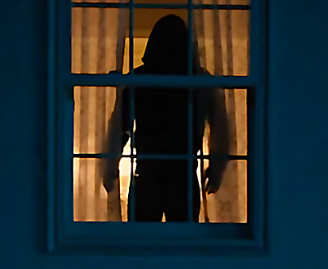
It was a large bay window, uncurtained. I had a front-row seat.
I expected to see a dinner table set for three. I expected to see a roast, candles, maybe flowers.
Instead, the dining room table was covered in stacks of legal documents.
Julian was there. He was wearing a suit, pacing back and forth, phone pressed to his ear. He looked agitated. A moment later, a black SUV pulled into the driveway—the spot where I had just been parked.
Two people got out. A man with a briefcase and a woman holding a notary stamp. They didn’t knock. They walked right in.
Then, Chloe walked into the room.
My breath caught in my throat. She wasn’t wearing the soft sweater I’d imagined. She was dressed in a stiff blazer, her hair pulled back tight. But it was her face that scared me. She looked gaunt. Pale. Her movements were robotic, like she was moving through thick water.
There was no hug. No greeting. Julian pointed to a chair. Chloe sat.
The man in the suit began spreading papers out in front of her. He was pointing at signature lines. Sign here. And here. And here.
Chloe wasn’t reading them. She was just signing, her hand trembling.
Julian stopped pacing and leaned over the table. He said something to the man in the suit, then looked at his watch. He looked out the window, scanning the driveway. He looked angry.
I realized then that the dinner invitation hadn’t been an olive branch. It was a timeline.
I needed to know what they were signing. I crept closer, hiding behind a trellis of ivy. The window was cracked open just a fraction.
“…she should have been here ten minutes ago,” Julian’s voice drifted out, sharp and angry. “If she doesn’t show up, the competency hearing is going to be harder to push through without the incident report.”
“We can still file the emergency order,” the lawyer said. “But it would be cleaner if she caused a scene here tonight. Violation of boundaries, mental instability… it helps the narrative for the conservatorship.”
My blood ran cold.
They weren’t just signing papers. They were preparing to take away my freedom.
“She’s got a nest egg,” Julian continued. “If we can get power of attorney over her assets by Monday, we cover the debt before the bookies break my legs. But I need her committed. I need her to look crazy.”
I covered my mouth to stop a sob from escaping. Julian had gambled it all away again. And now, he was going to use me—my savings, my home, my sanity—to pay for it. And he was using Chloe, bullied and broken, to help him do it.
Chloe stopped writing. She looked up, her eyes glassy. “Mom isn’t crazy, Julian.”
“Shut up and sign,” Julian hissed, grabbing her shoulder hard. “Do you want to lose this house? Do you want to be on the street?”
She shrank away from him and kept signing.
I wanted to burst in there. I wanted to scream. But I knew if I walked through that door, I was walking into a trap. They had a lawyer. They had a script. If I screamed, if I fought, I was just proving their point: Look at the unstable mother.
I scrambled back to my car, shaking uncontrollably. I drove away, my vision blurred by tears.
I pulled into a 24-hour gas station off I-25, the fluorescent lights buzzing overhead like angry hornets. I needed to think. I needed a lawyer. I needed to get Chloe out of there.
My phone buzzed.
It was a text from an unknown number.
“Señora, this is Maria. I am using my son’s phone. Do not go back to your apartment. I heard Julian on the phone earlier. He paid someone to ‘toss’ your place tonight. To find ‘evidence’ of dementia. Pills, mess, confusion. If you go home, the police will be waiting to take you for a psych hold. Go to a hotel. Pay cash. Hide.”
I lowered the phone.
I thought about my quiet apartment. My books, my photos of Chloe, my life. Right now, someone was destroying it, planting fake evidence to frame me as incompetent so my son-in-law could steal my retirement to pay his gambling debts.
I looked at the text again. “Mom, can we have dinner? I miss you.”
It hadn’t been Chloe. Julian had sent it from her phone.
I put the car in gear. I wasn’t going home. I wasn’t going to dinner. I was going to the police station two towns over, and I was going to burn Julian’s world to the ground.
