The air in the Bellford Municipal Court was stale, smelling of floor wax and old paper, a scent that usually signaled the end of someone’s freedom. The fluorescent lights hummed with a headache-inducing flicker, casting long, harsh shadows against the wood-paneled walls.
Judge Harvey Denham adjusted his spectacles and rubbed the bridge of his nose. It was a Tuesday, usually reserved for petty thefts and traffic violations. He had seen it all: the liars, the career criminals, the bored teenagers looking for a thrill. He was tired. Tired of the system, tired of the repetition, tired of the lack of humanity that seemed to permeate these walls.
“Next case,” Denham muttered, his voice gravelly.
The bailiff, a heavy-set man named Miller who had long since lost his patience with the world, barked, “Case number 402. The State vs. Owen Myles.”
The heavy oak doors creaked open. Denham looked down at the docket, then up at the defendant. He paused.
Walking toward the defense table was not the usual hardened tough guy or defiant youth. It was a boy. A child, really. Owen Myles was fifteen, but he looked twelve. His clothes were tragic—a hoodie two sizes too big that hung off his skeletal frame like a ghostly cloak, and jeans worn white at the knees. But it was his face that arrested Judge Denham’s attention.
The boy was pale, a sickly, translucent white. His eyes were dark, sunken hollows of exhaustion, darting around the room like a trapped animal waiting for the strike. He didn’t look like a criminal. He looked like a tragedy in motion.
He stood beside the public defender, a young woman who looked overworked and underprepared.
“State your name,” Denham said, softening his voice instinctively.
“Owen… Owen Myles,” the boy whispered. His voice cracked, dry and brittle.
The prosecutor, Mr. Henderson, cleared his throat. He was a man who saw the law as black and white, with no room for gray. “Your Honor, the defendant is charged with theft of property from Bellwin Grocery. Specifically, one loaf of whole wheat bread and a block of sharp cheddar cheese. Value totaling eight dollars and fifty cents.”
A ripple of snickering moved through the spectators’ gallery. Someone in the back whispered, “Bread? Seriously?”
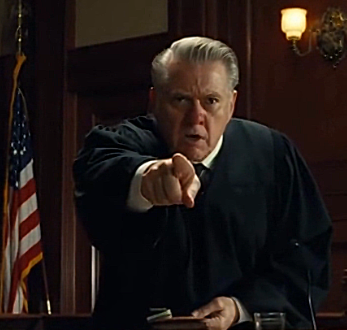
Judge Denham’s gavel came down with a sharp crack that silenced the room instantly. He fixed the gallery with a glare that could peel paint. Then, he turned his eyes back to Owen.
“Is this true, son?” Denham asked. “Did you take these items without paying?”
Owen stared at his sneakers, his hands trembling violently. “Yes, sir.”
“Why?”
The question hung in the air. Most judges wouldn’t ask. They would look at the statute, apply the sentencing guidelines, and move on. But Denham saw the trembling. He saw the malnutrition etched into the boy’s jawline.
Owen looked up, tears brimming in those dark eyes. “My mom… she’s sick. Real sick. She used to work at the diner, but her back gave out, and then the infection set in. She hasn’t been able to get out of bed in three weeks.”
The boy took a jagged breath, his chest heaving. “We ran out of food stamps on Friday. I tried to get a day job at the construction site, but they said I was too small. I asked the grocer for credit, but he said no. Mom… she woke up crying because her stomach hurt so bad. She didn’t ask me to steal. She doesn’t know. But I couldn’t watch her die hungry. I just couldn’t.”
A heavy, suffocating silence descended on the courtroom. The air conditioner hummed, sounding like a roar in the quiet.
Denham looked at the police report. The arresting officer had noted that when caught, the boy hadn’t run. He had dropped to his knees and begged the store owner to just keep the food, even if they called the police.
“The store owner,” Denham said, his voice low. “Is he present?”
A man in the second row stood up. Mr. Garris. He was a pillar of the community, or so he liked to think. He adjusted his tie, looking indignant.
“I am, Your Honor,” Garris said. “And I’d like to say, it’s not about the bread. It’s about the principle. If we let them steal, anarchy follows. I run a business, not a charity.”
Denham stared at Garris for a long, uncomfortable minute. The judge’s face was unreadable, but the veins in his temple were throbbing.
“The principle,” Denham repeated slowly.
“Yes, Your Honor. The law is the law.”
Judge Denham slowly stood up. He was a tall man, imposing in his black robes. He looked from the shivering boy to the self-righteous grocer, and then out at the gallery—a mix of police officers, court clerks, and curious citizens who had snickered at a child’s hunger.
“The law is indeed the law,” Denham said, his voice rising, resonating off the walls. “But today, the law has failed.”
He picked up his pen and wrote something on the docket.
“Owen Myles, I have heard your plea. You admitted to the theft. Under the strict letter of the law, you are guilty.”
Owen’s shoulders slumped. He closed his eyes, tears finally spilling over, tracking through the dirt on his cheeks.
“However,” Denham continued, his voice booming now, “I am not just a judge of the law, but a judge of justice. And there is no justice here.”
He pointed a finger at the store owner. “Mr. Garris, you are a man of means. You saw a starving child and chose the police over compassion. You chose a block of cheese over a human life.”
He turned his gaze to the rest of the room. “And the rest of you. You live in a city so prosperous, yet you allow a woman to wither away in her bed and a fifteen-year-old boy to carry the weight of survival on his back. You snickered when the charges were read. You found amusement in his desperation.”
Denham slammed the gavel down.
“I hereby fine the defendant ten dollars.”
Owen flinched. He didn’t have ten cents, let alone ten dollars.
“But,” Denham reached into his own pocket, pulling out a crisp ten-dollar bill, “I am paying that fine for him.”
He tossed the bill onto the bench.
“Furthermore,” Denham roared, looking at the bailiff, “I am fining every single person in this courtroom fifty cents.”
The room erupted in confused murmurs.
“Silence!” Denham shouted. “I am fining you fifty cents each for living in a town where a child has to steal bread to save his dying mother. Bailiff, collect the fines.”
The bailiff, Miller, stood stunned for a moment. Then, a small smile touched his lips. He took his hat off and placed his own dollar bill inside.
“You heard the Judge!” Miller shouted. “Pay up!”
He walked to the prosecutor first. Mr. Henderson, usually stone-faced, looked at the boy, then at the judge. He pulled out his wallet and dropped a five-dollar bill into the hat.
Miller moved to Mr. Garris. The store owner’s face was beet red. He looked around the room, seeing the glare of the community turning on him. Shame, hot and prickly, finally pierced his pride. He opened his wallet and put a twenty-dollar bill in the hat. “I… I withdraw the charges,” he mumbled.
“Too late for that,” Denham said. “Keep collecting.”
The hat moved through the room. Police officers emptied their pockets. The court reporter threw in a handful of change. The spectators, the ones who had laughed, now reached into their purses and pockets with humbled expressions.
When the hat made its way back to the bench, it was heavy.
Judge Denham counted it out. “Forty-seven dollars and fifty cents.”
He looked at the police chief who was sitting in the front row. “Chief, take this boy and this money. Drive him to the market—not Mr. Garris’s market—and buy enough groceries to last a week. Then drive him home and have a welfare check done on his mother. Get her a doctor. Today.”
The Chief stood up and nodded respectfully. “Yes, Your Honor.”
Judge Denham looked down at Owen. The boy was sobbing now, but it wasn’t out of fear. It was the release of a burden he had carried alone for too long.
“Owen,” Denham said softly. “You are free to go. Do not steal again. But know this: you are not a criminal. You are a good son who was let down by his neighbors. We will do better.”
Owen wiped his eyes with his sleeve. He looked up at the judge, his voice barely a whisper. “Thank you.”
As the boy walked out of the courtroom, flanked by the Police Chief, the room remained silent. Nobody moved to leave. They all sat there, staring at the empty doors, feeling the weight of the fifty-cent fine that had cost them nothing, but taught them everything.
Judge Denham sat back down, the adrenaline fading, leaving him weary but satisfied.
“Next case,” he said.
