A sixteen-year-old scholarship student asked a history question… But her tenured teacher’s answer cost him everything he’d spent eighteen years building.
Lincoln High. Third period. AP History. The kind of silence that happens when forty teenagers sense danger before they can name it.
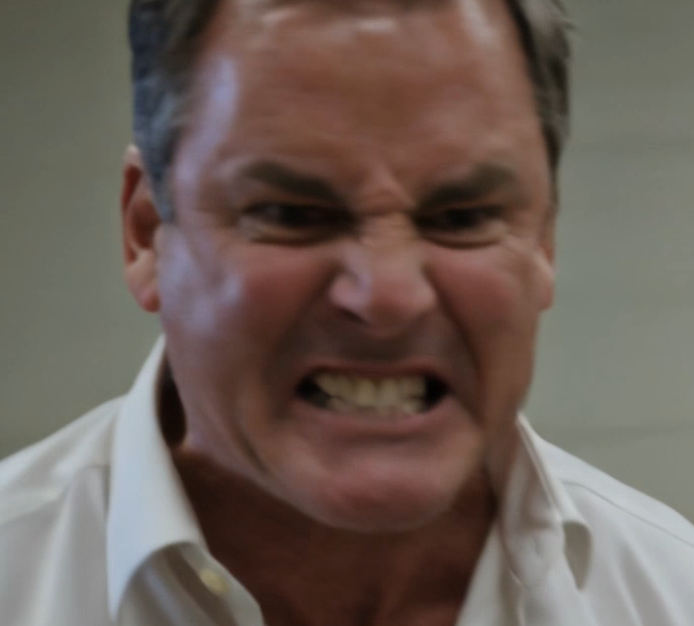
Mr. Harrison paced the front of the room. Forty-two years old. Tenured. The kind of teacher who’d survived three principals and two lawsuits because brilliant men, people whispered, were allowed their edges.
Emma sat in the back row. Sixteen. Scholarship kid. Thrift-store jeans, a notebook wrapped in duct tape, and the kind of quiet that comes not from timidity but from practice. She’d learned young that being invisible was safer than being seen.
She raised her hand.
Harrison didn’t look up. “What.”
It wasn’t a question. It was a dismissal shaped like one.
“I think there’s an error in the textbook,” Emma said. “The date for the—”
He stopped pacing. The room went rigid.
“You think?” His voice scaled upward like something cracking under pressure. “You’ve been alive for sixteen years. I’ve been teaching history for eighteen. Sit down and shut up.”
A few students issued the nervous laughter of people watching a car accident from across a field. Emma didn’t sit.
“But the source material clearly states—”
“Are you defying me?”
“No, sir. I’m just—”
“Stand up.”
She stood. He walked toward her. Slow. Deliberate. The kind of pace that means the person walking has decided something.
“You want to correct me? In my classroom?”
Emma held her ground. “I’m not trying to—”
His hand shot out and ripped the textbook from her desk. He held it above his head like evidence against her. “This book,” he said, “was written by professors. Doctors. People who actually know what they’re talking about.”
He threw it. Hard. It sailed across the room, hit the wall, and pages scattered like a flock of startled birds. Gasps erupted in waves.
Emma flinched. She did not sit down.
“Now sit down before I—”
“Before you what?” Her voice cracked—not from weakness, but from something past fear. “Throw something else?”
Harrison’s face went from red to something deeper. The color of a man who’s realized, too late, that he’s crossed a line in front of witnesses.
“Don’t test me, girl.”
“My name is Emma.”
He took two steps toward her. “I know your name. I know everything about you. Scholarship student. Free lunch program. Living with your grandmother because your parents—”
“Stop.” Her hands shook now.
“You come in here, wearing those clothes, with that attitude—”
“What’s wrong with my clothes?”
“Nothing,” Harrison said. “If you were working at a gas station.”
Laughter rippled through the room—cruel, and fed by fear, and encouraged by the way adults sometimes laugh when someone powerful is being vicious, because laughing feels safer than refusing to.
Emma’s jaw tightened. “That’s not appropriate—”
“You want to talk about appropriate?” He stepped close enough that she could see the vein in his temple. “Sit. Down. Now.“
“No.”
The word hung in the room like a pulled pin.
His hand moved before his brain finished the decision. He grabbed her arm—fingers digging in—and yanked her forward. Emma stumbled. Her hip caught the desk edge. A sound escaped her that wasn’t a word.
“Let go—”
“You don’t tell me what to do.”
He shoved her. She went backward, shoulder catching the corner of the desk behind her, and she hit the floor.
For a half-second, nobody breathed.
Then the room erupted.
“Oh my God—”
“Someone get help!”
Phones came up everywhere. Twenty-six of them, as it would later turn out. Twenty-six different angles.
Emma lay on the floor trying to breathe through the fire in her shoulder. Harrison stood over her, chest heaving.
“You brought this on yourself,” he said.
“You pushed me.” Her voice came out in fragments.
“You were being disrespectful.”
“I asked a question.“
A girl in the front row—Jessica—was already at the door. “I’m getting security!”
“You do that and you’re suspended!“
Jessica ran anyway.
Two students rushed to Emma’s side and helped her sit up. She bit back a scream when her shoulder moved. Harrison pointed at them like he still had authority. “Sit down! All of you! Put those phones away!“
“Fuck you,” one of the boys said. His voice was steady in the way that comes after fear burns off and something cleaner takes its place. “You just assaulted her.”
“I did no such thing. She fell.”
“We all watched you push her.”
“That’s not what happened.”
“It’s on video. Like twenty of us recorded it.”
The color drained from Harrison’s face in real time.
The door crashed open. Security first, then Vice Principal Martinez, who took exactly three seconds to read the room before her expression shifted from confusion to something that looked like controlled fury.
Jessica stepped forward before anyone else could speak. “Mr. Harrison grabbed Emma. He threw her book at the wall. He shoved her into a desk. We all saw it.”
“Show me the video,” Martinez said.
Three students stepped forward with their phones. Martinez watched for forty seconds. Nobody spoke.
“Get out,” she said to Harrison. Her voice had the quality of ice over deep water.
“Excuse me—”
“You’re suspended. Effective immediately. Security will escort you from the building.”
“I’m tenured. This is a misunderstanding—”
“You put your hands on a student.” Each word separate. Final. “You threw school property at a wall. You grabbed her. You shoved her to the floor. That is not a misunderstanding. That is assault.”
The security guard touched Harrison’s arm—the same way Harrison had touched Emma’s. Harrison pulled back like it burned him.
“Don’t—don’t touch me—”
“Sir. Let’s go.”
They walked him out. His protests bounced down the hallway and then went quiet.
The room sat in the aftermath of something that couldn’t be untaken back.
Emma rocked slightly, cradling her arm against her chest. “Something’s wrong,” she said. “My shoulder—something’s wrong with my shoulder.”
Martinez knelt beside her. “The ambulance is coming. You’re going to be okay.”
“He just—” Emma’s voice broke, and it wasn’t the pain. “He just grabbed me. I just asked a question.“
“I know, sweetheart.” Martinez put a hand on her back. “I know.”
Jessica sat down beside Emma and took her free hand without being asked.
The paramedics arrived in eight minutes. By then, the video had been forwarded to the superintendent, the school board attorney, and the news desk at the local NBC affiliate.
By noon, it had eleven million views.
By three o’clock, Harrison’s teaching license was under formal investigation.
By morning, he was terminated.
Emma’s shoulder was dislocated—separated AC joint. Six weeks in a sling. Her grandmother filed suit within the week: assault and battery, emotional distress, negligent supervision. The school district settled for two hundred and fifty thousand dollars before the case reached discovery.
Harrison hired a lawyer and claimed provocation. His attorney argued that Emma had been willfully disruptive, that Harrison’s action was reflexive, that the video lacked context.
The jury watched all twenty-three versions from twenty-three different angles.
They deliberated for forty-five minutes.
Guilty.
Six months in county jail. Five years probation. Teaching license permanently revoked. A criminal record that traveled with him everywhere a background check could go.
At sentencing, Emma stood before the court in a dark blazer, her arm fully healed.
“I just wanted to learn,” she said. “I thought teachers were supposed to encourage questions. To make students think harder, not smaller.”
She paused. Around her, the courtroom held its breath.
“He didn’t just hurt my shoulder that day. He tried to hurt my spirit. To make me feel worthless because of where I came from and what I wore and who I was.” Her voice steadied into something that didn’t shake. “But he failed. Because I’m not worthless. And no one—especially not someone trusted to protect students—gets to put their hands on me and walk away.”
The judge sentenced Harrison to the maximum.
He lost the house in the civil settlement. His wife filed for divorce before the ink dried on the guilty verdict. His adult children stopped returning his calls. His appeals were denied at every level. His license application was rejected without review.
He works at a hardware store now. Stocking shelves. Minimum wage. The kind of job he once used to make a sixteen-year-old girl feel ashamed of her future.
One afternoon, a customer came in looking for paint samples.
Harrison looked up from a shelf he was restocking.
Emma stood at the end of the aisle. College sweatshirt—State University. Confident posture. Both arms working fine.
She didn’t recognize him at first. Then she did. Her smile faded, not into anger, but into something quieter and more permanent.
“I’ll get someone else to help you,” Harrison said.
“No.” Emma’s voice was the same as it had been in that classroom—calm, and not afraid, and completely sure of itself. “You can help me.”
He pulled paint samples with hands that wouldn’t stop trembling. He noticed the sweatshirt. “State University?”
“Full ride. History major.” She let that sit for a moment. “I’m going to be a teacher. The kind that encourages questions. The kind that would never, ever hurt a student.” She took the samples from his hand. “The kind you should have been.”
She paid and walked out.
Harrison stood at the register and didn’t move for a long time.
Six months after that, Emma launched a foundation for students who’d experienced classroom violence—therapy referrals, legal navigation, advocacy support. She named it Question Everything.
It helped forty-seven students in its first year.
Emma graduated summa cum laude. Got her credential. Applied to Lincoln High.
They hired her immediately.
On her first morning, she stood at the front of the same building—different classroom—and put a hand-lettered sign above her door:
ALL QUESTIONS WELCOME. NO EXCEPTIONS.
When students filed in—scholarship kids, free-lunch kids, thrift-store kids, the kind of kids who’d learned to be invisible—she smiled at each of them.
“Welcome,” she said. “I’m Ms. Emma. And I genuinely want to hear what you think.”
Some of them looked suspicious. Some of them looked like they were waiting for the catch.
A girl in the back row raised her hand. “Really? Even if we disagree with the textbook?”
Emma smiled wider than she had in years.
“Especially then.”
